Getting It Booked In
When a spring snaps or a door won't budge off the track, you want someone on the phone who can tell you what's wrong before the truck even leaves. We run out of Woburn, about 5 miles from Lexington, so there's no branch sitting inside town - just a crew that makes the run regularly because Lexington is part of the territory we cover every week.
Tell us the door's age if you know it. A lot of Lexington stock went up around 1964, and knowing that before we arrive changes what's riding on the truck. Original torsion hardware from that era isn't the same as what's gone into additions or rebuilds since, and showing up with the wrong spring size wastes your morning and ours.
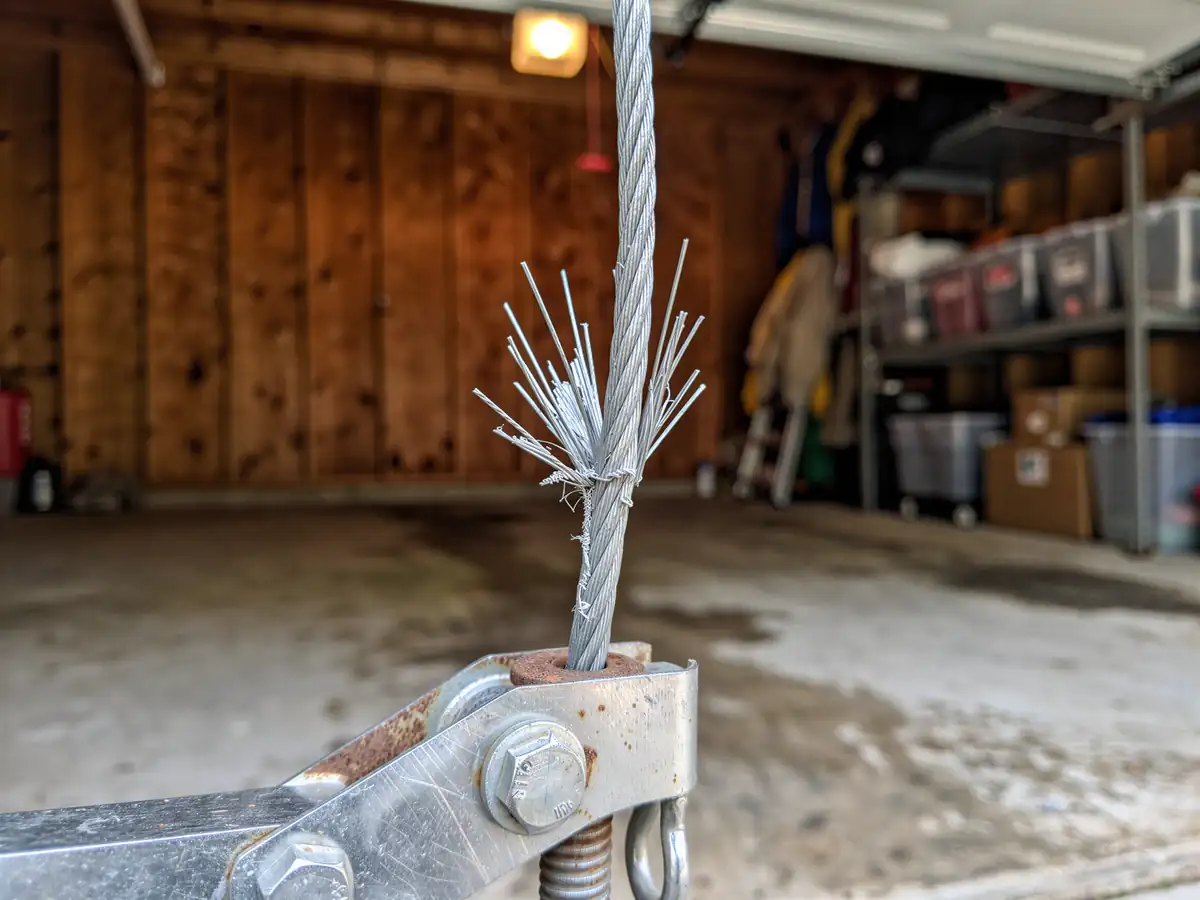
We ask a few quick questions on the call: does the door move at all, is the opener making noise without lifting, are the cables frayed or has a panel buckled. That triage tells us whether this is a same-visit fix or a job that needs a part ordered first.
Doing It Yourself
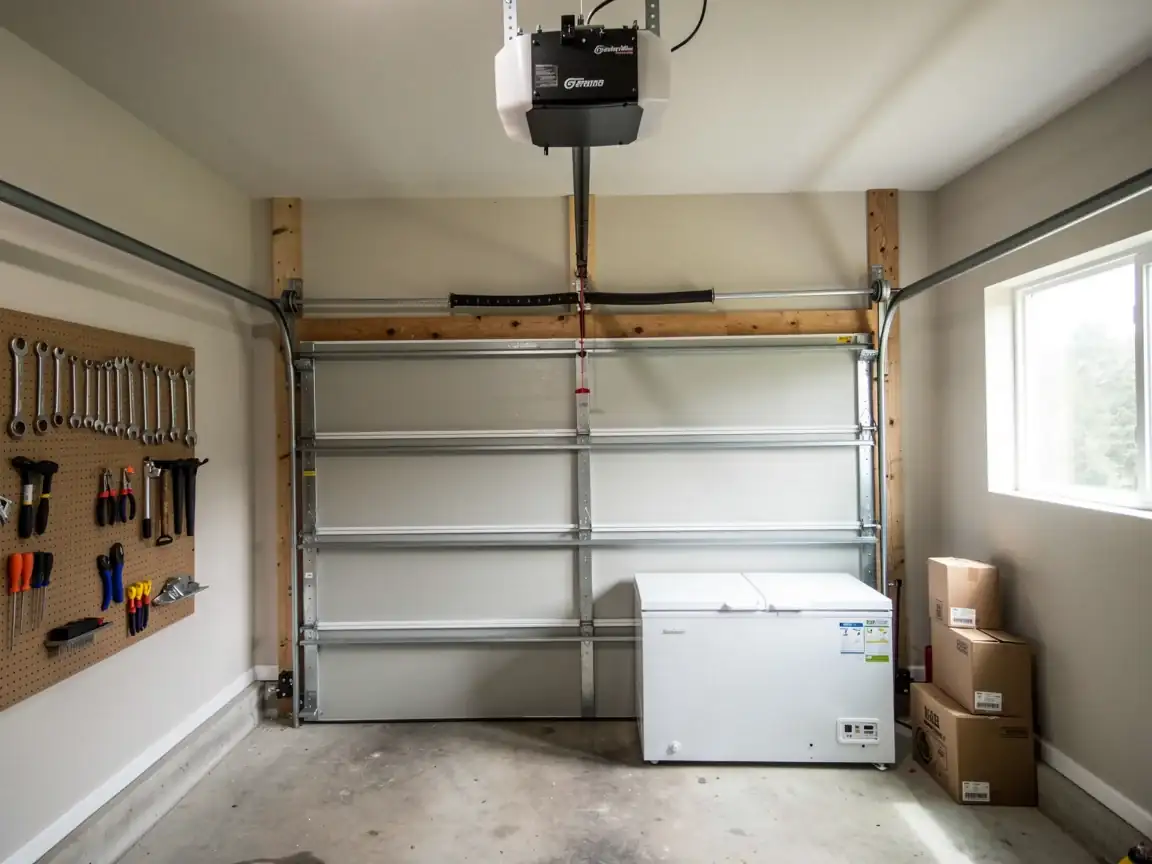
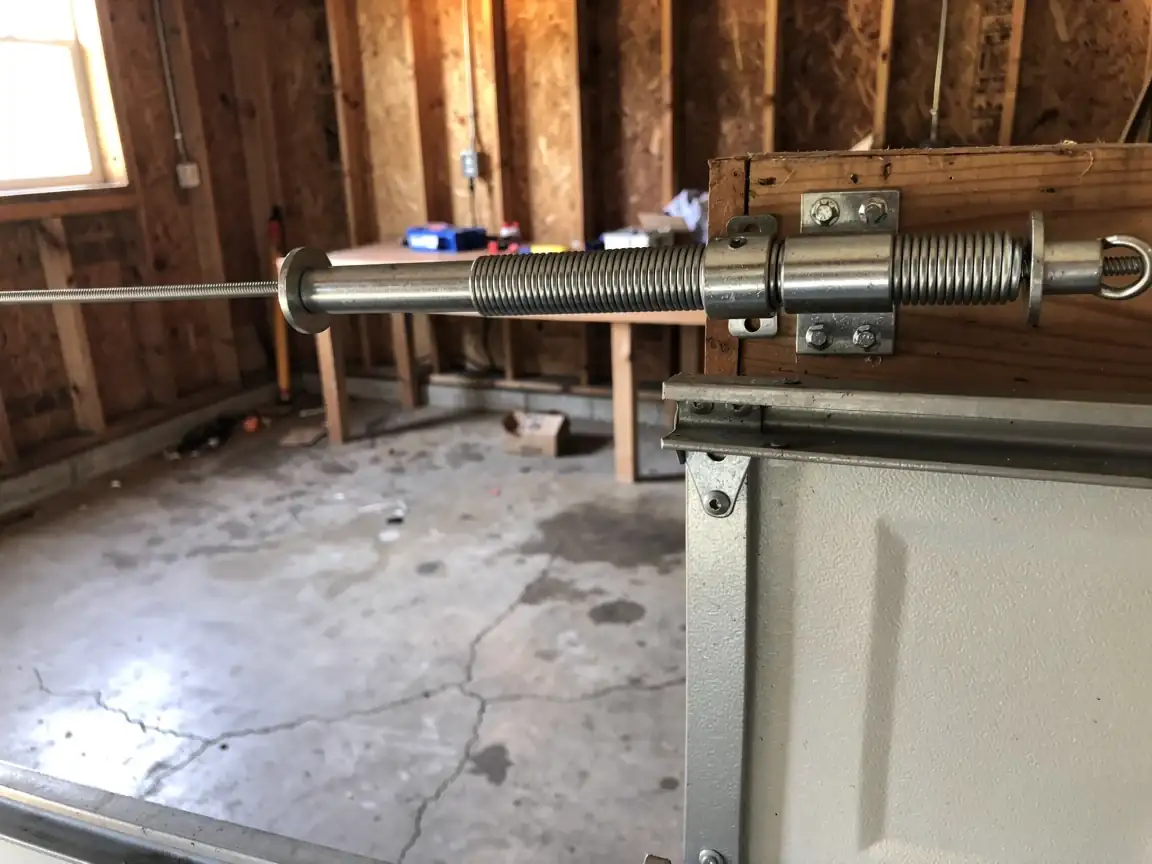
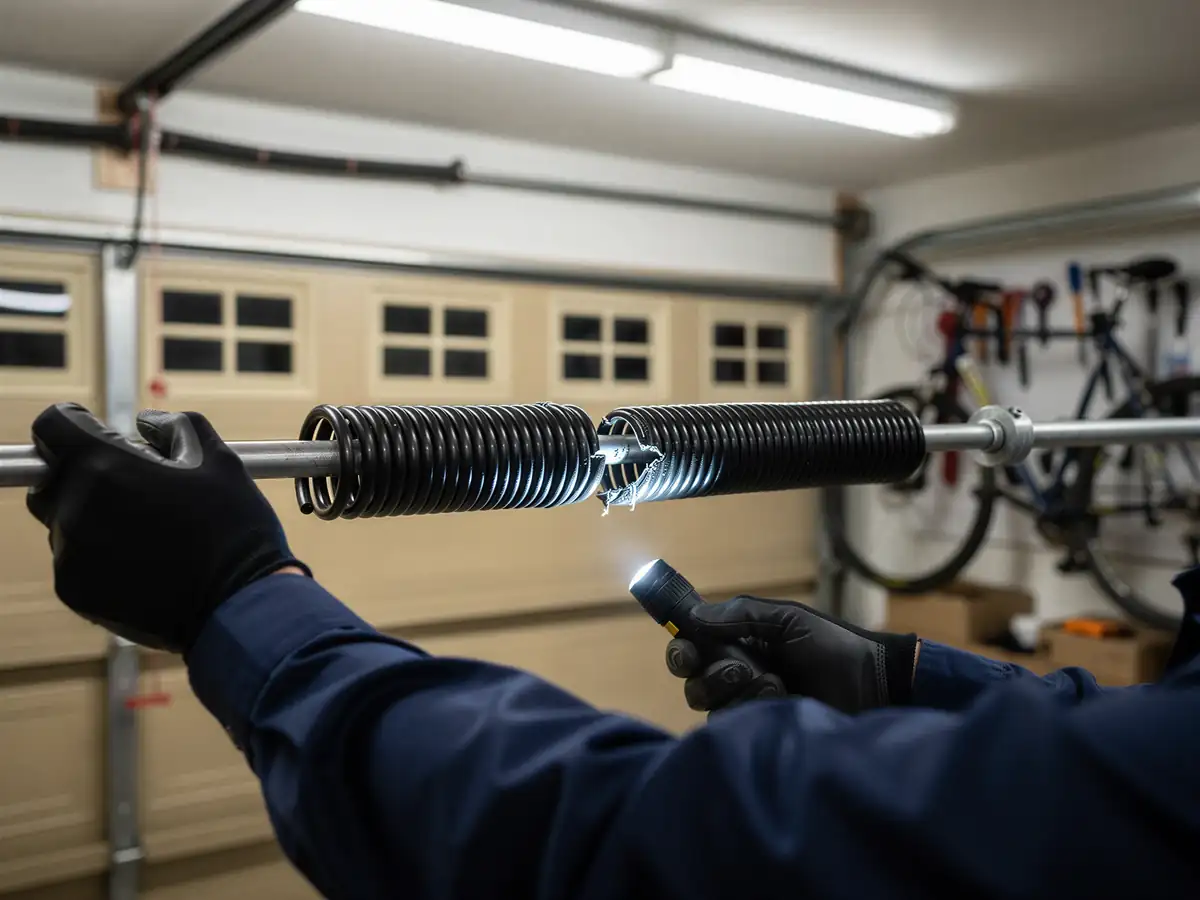
If a spring has let go, don't try to force the door up by hand or with the opener. A torsion spring under tension can take a finger off, and on 1960s-era setups the hardware holding it in place has had sixty years to corrode or loosen - not the place to improvise with a wrench you found in the garage.
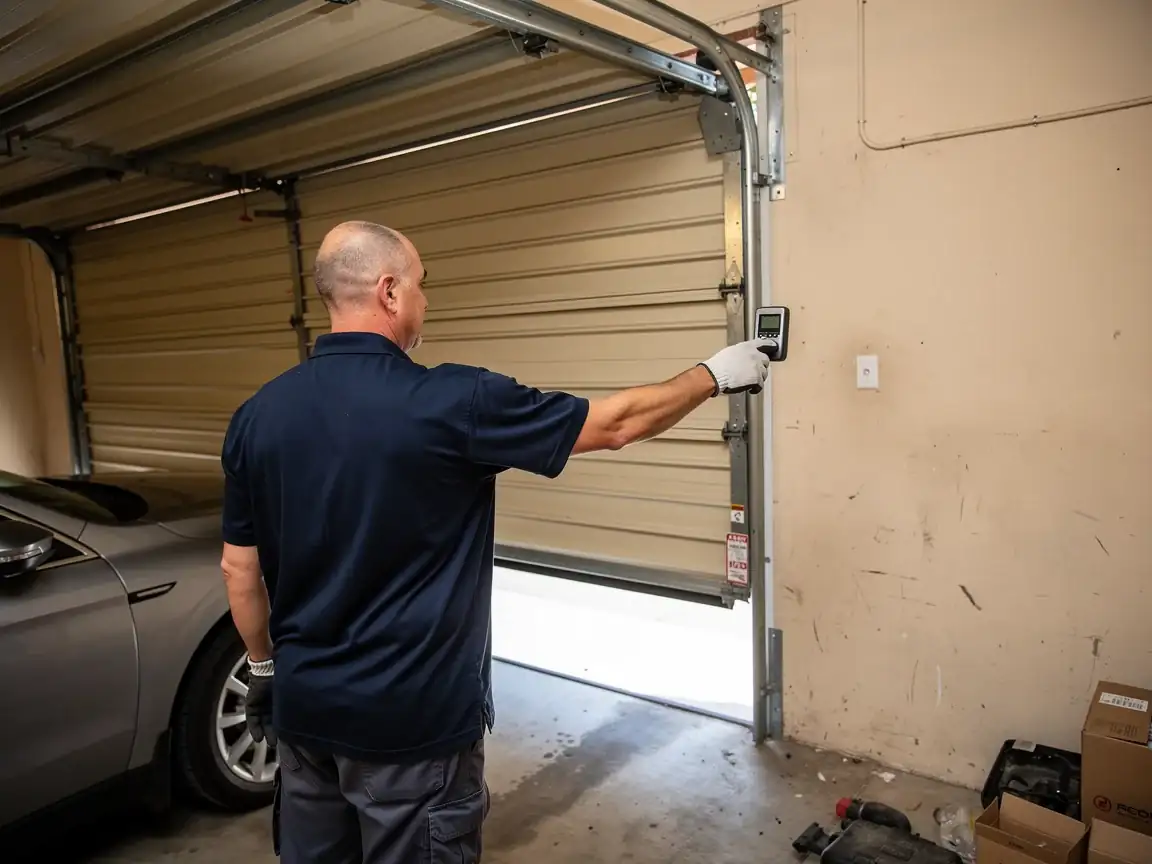
What you can safely check: the wall switch for the opener, whether the sensor eyes near the floor are knocked out of alignment (a common cause of a door that won't close, not an emergency), and whether the track has visibly pulled away from the frame. Any of those you can look at without touching a spring or a cable.
If the door is stuck halfway, cables look frayed, or you hear a bang followed by the door going slack, stop and call. That's not a DIY afternoon - that's a wound or a car trapped under a half-ton door, and neither is worth saving a service call.
What It Costs
We don't post a flat number here because what it costs depends on what broke and what the door's hardware actually is
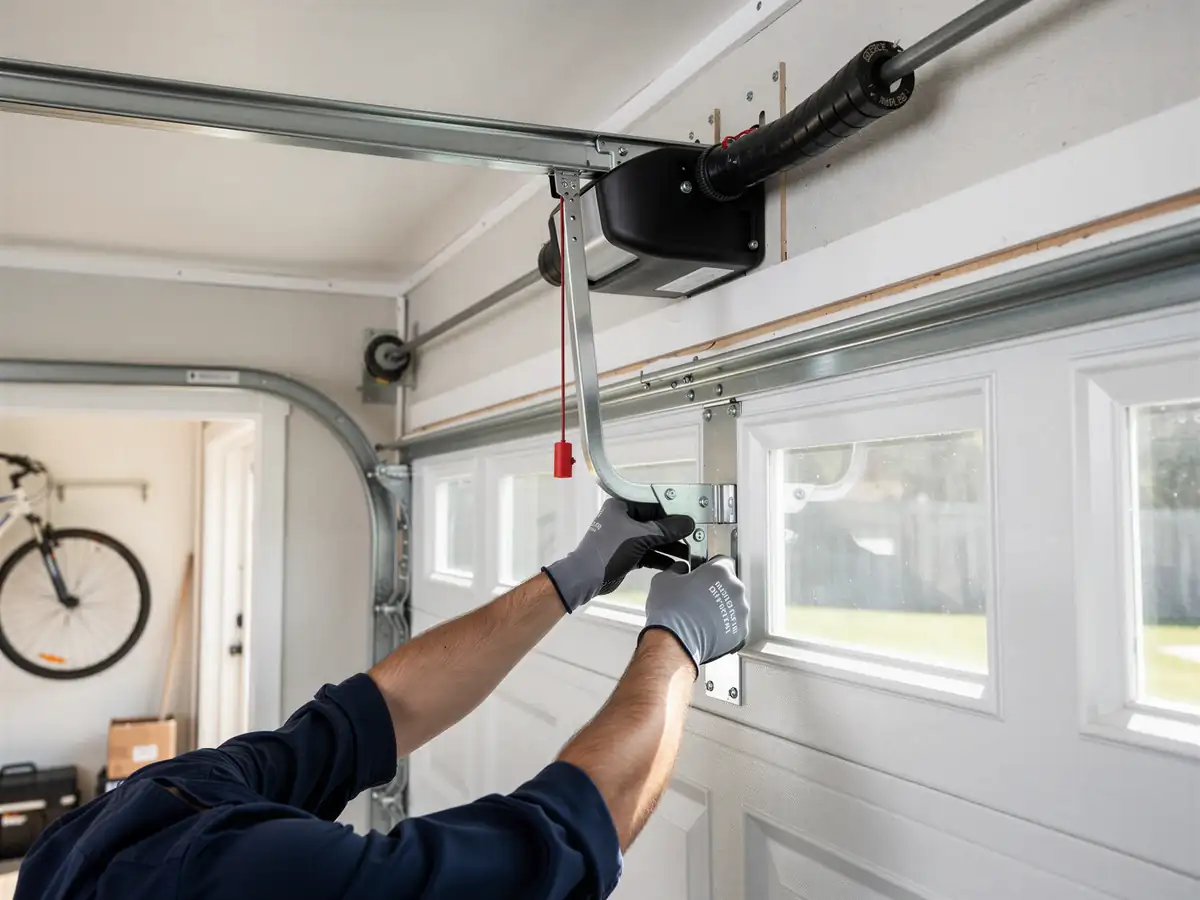
And in Lexington, where median household income runs well above the regional average, we see more owners choose to replace aging opener units and tracks outright rather than patch a sixty-year-old setup one more time. That's a choice, not a requirement; plenty of these doors are worth repairing properly instead.
The honest limitation
If a part isn't something we carry on the truck - a discontinued opener board, for instance - we have to order it, and that adds a day or more regardless of what anyone quotes you over the phone. We'll tell you straight when that's the case instead of guessing at a timeline.
Why This Fails Locally
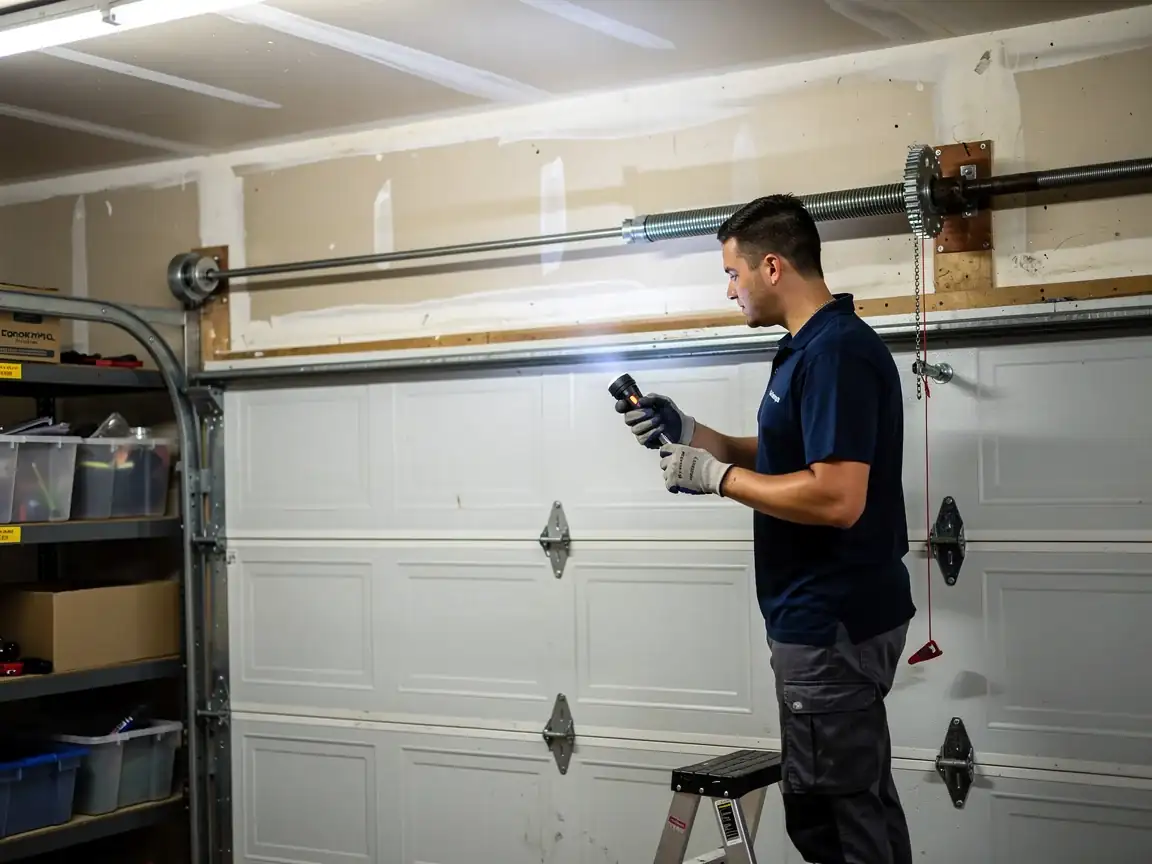
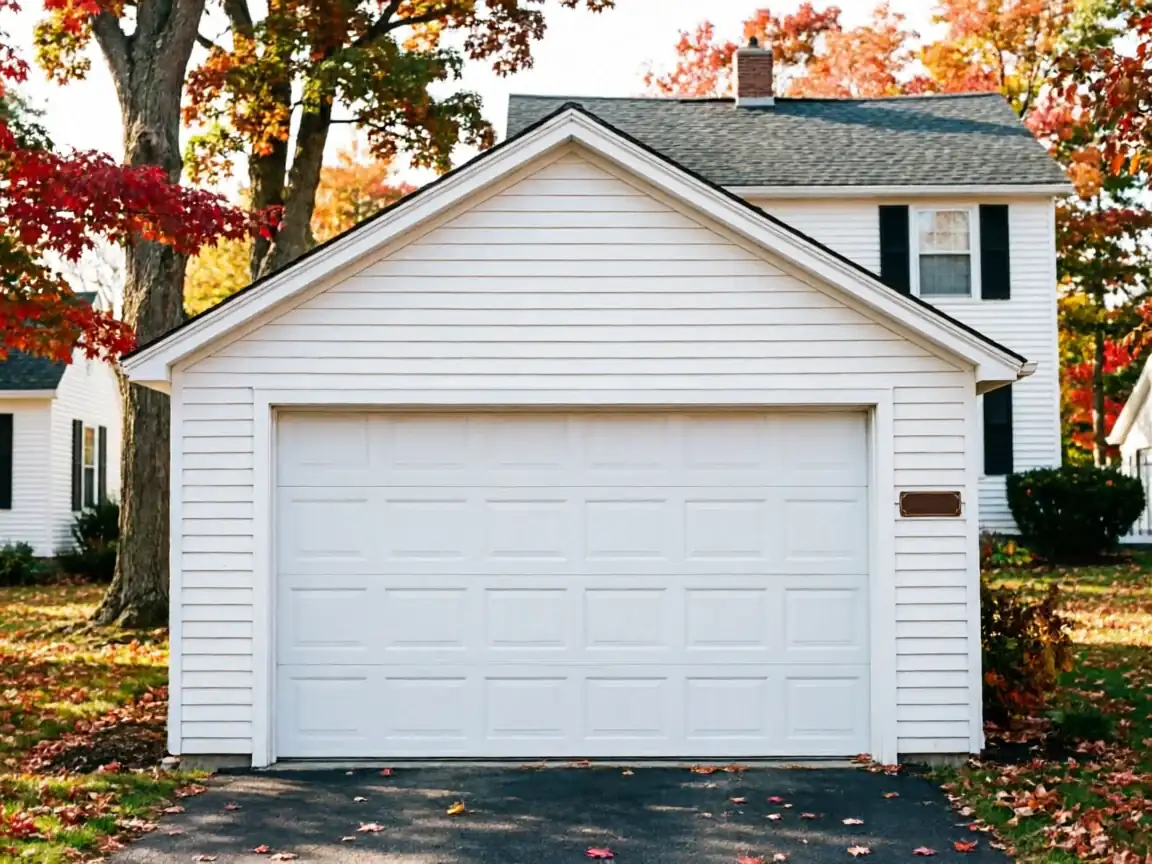
Lexington's housing mostly dates to around 1964, which puts a lot of garages here squarely in the era of single-layer steel doors on extension or early torsion springs - hardware that's been cycling through New England winters for six decades. That's the fault pattern we see on these calls: springs fatigued from cold-weather stress, not springs that failed from one bad day.
The region sits in a severe cold climate band, and that matters more than it sounds. Steel contracts in the cold, bolts on original track brackets work loose a little more each winter, and rollers that were fine in October bind up hard once temperatures drop. On a door that's already 50-plus years old, that's the difference between a sticky morning and a spring letting go in the driveway.
With roughly 12,337 households in Lexington, that 1960s-era hardware is common enough that the failure we're describing isn't rare - it's close to routine on this side of the service area.
Stocked Parts
We keep common torsion springs, standard rollers, and cable sets sized for the door widths that match 1960s-70s construction, since that's what shows up across most of the towns we run, Lexington included. Openers are a mixed bag - if yours is original to the house, the control board may be old enough that we can't match it off the truck.
When that happens, we're straight about it: the part gets ordered, and the job runs on the supplier's timeline, not ours. That's the one place this kind of work has a real limitation worth stating up front, rather than promising a same-day fix we can't back up.