The Symptom
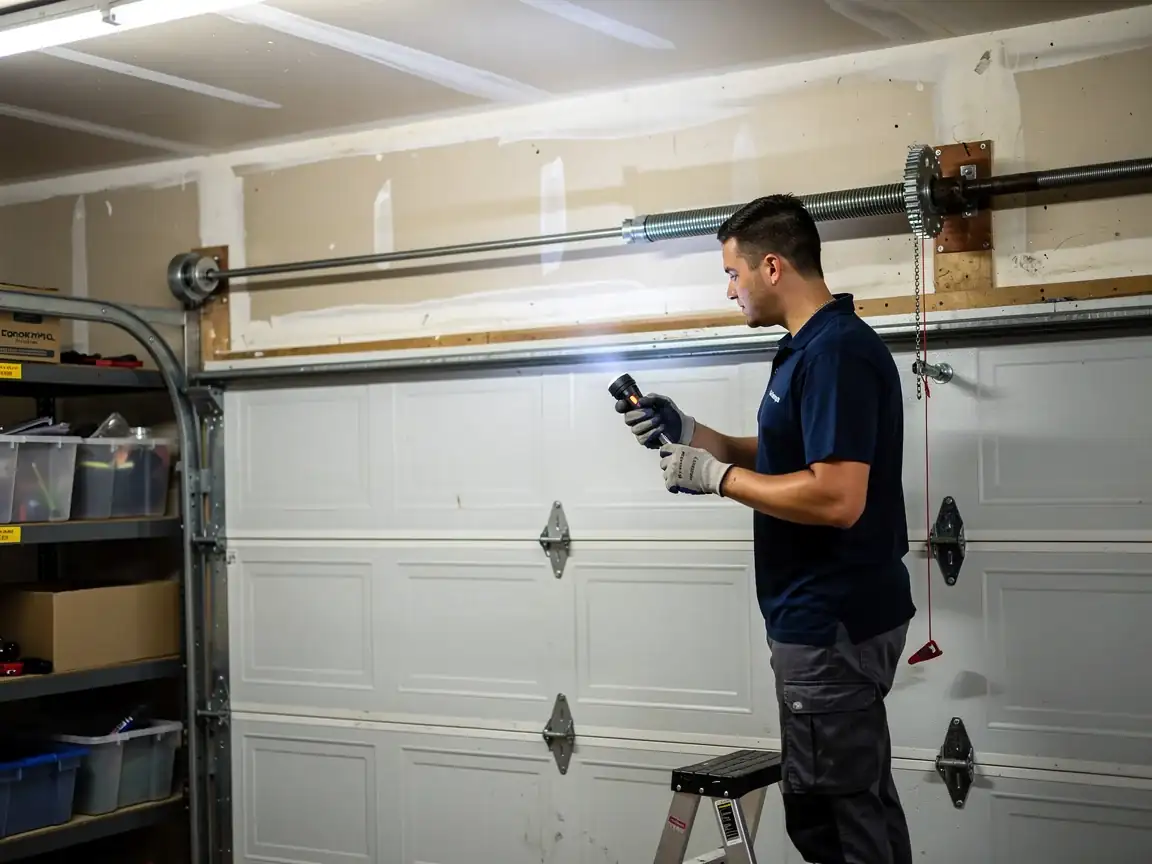
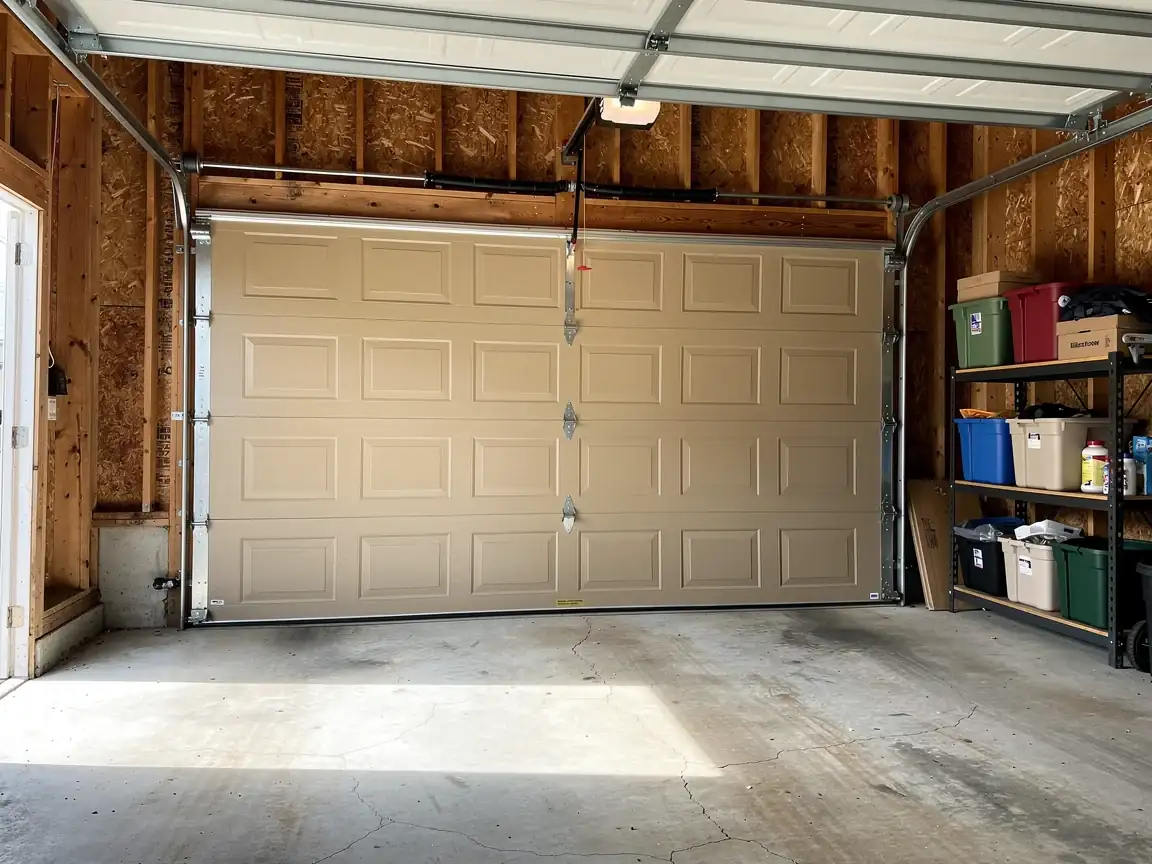
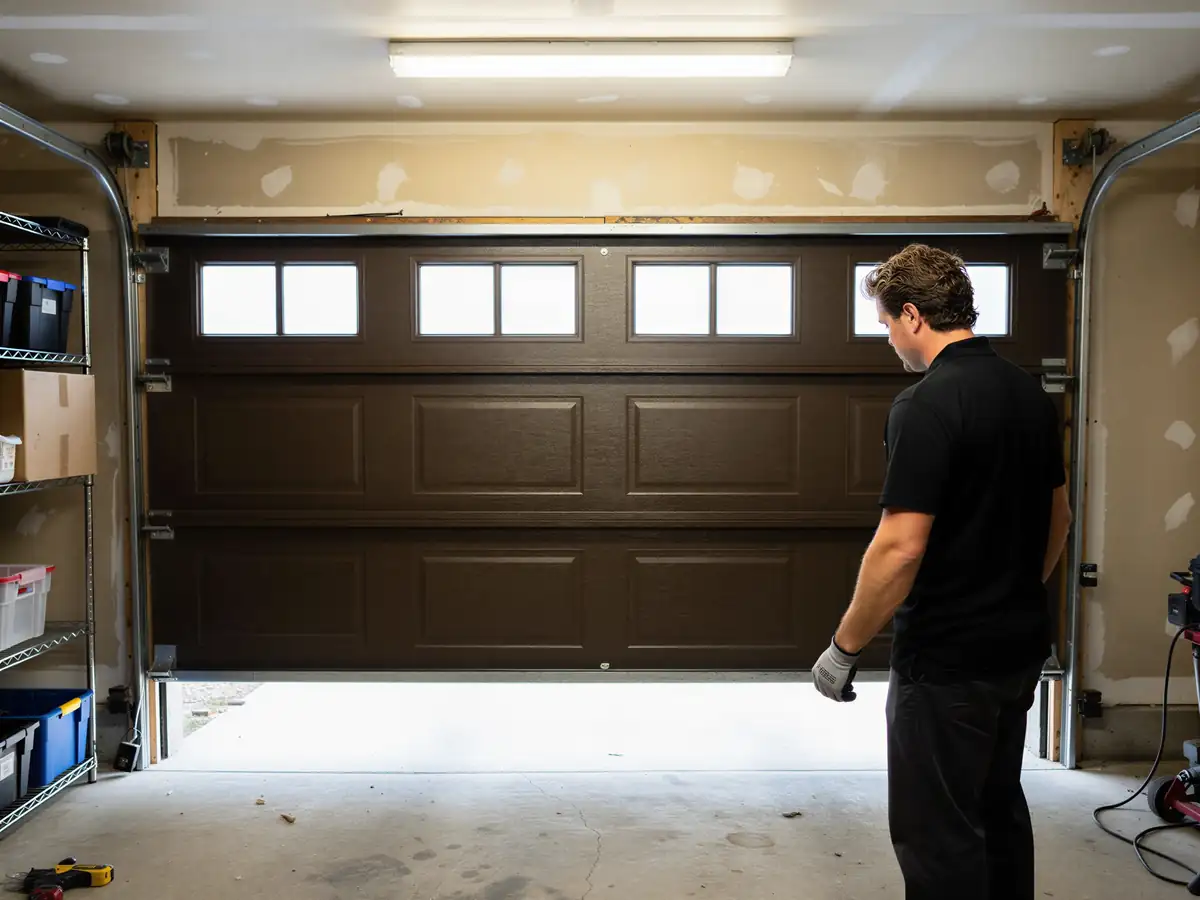
If your door grinds, hops, or shudders as it travels the track, the rollers are the first thing to check before you blame the opener. You'll hear it before you see it: a rhythmic clunk at the same spot in the travel, or a scrape that gets louder in cold weather. Open the door by hand and watch the rollers turn - cracked plastic, a roller that's gone oval instead of round, or a stem that's bent and dragging against the track edge are all signs the roller has reached the end of its life.
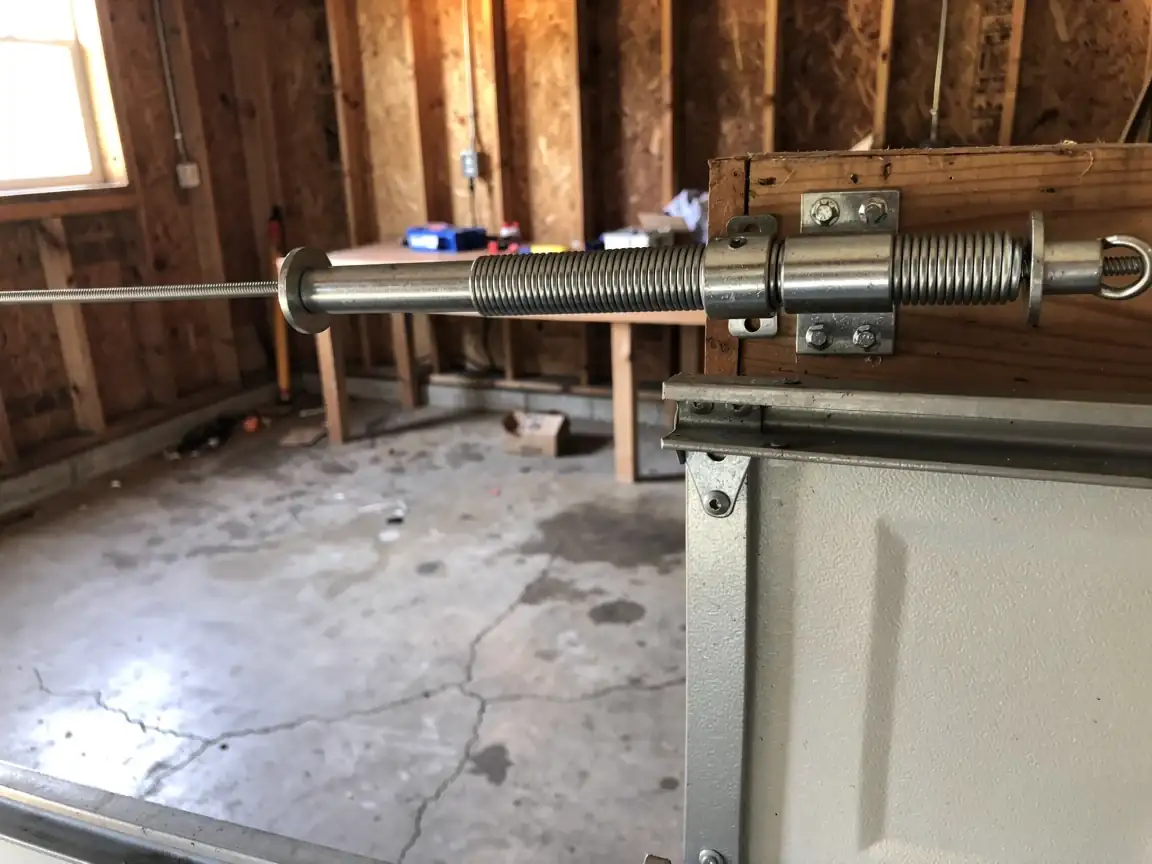
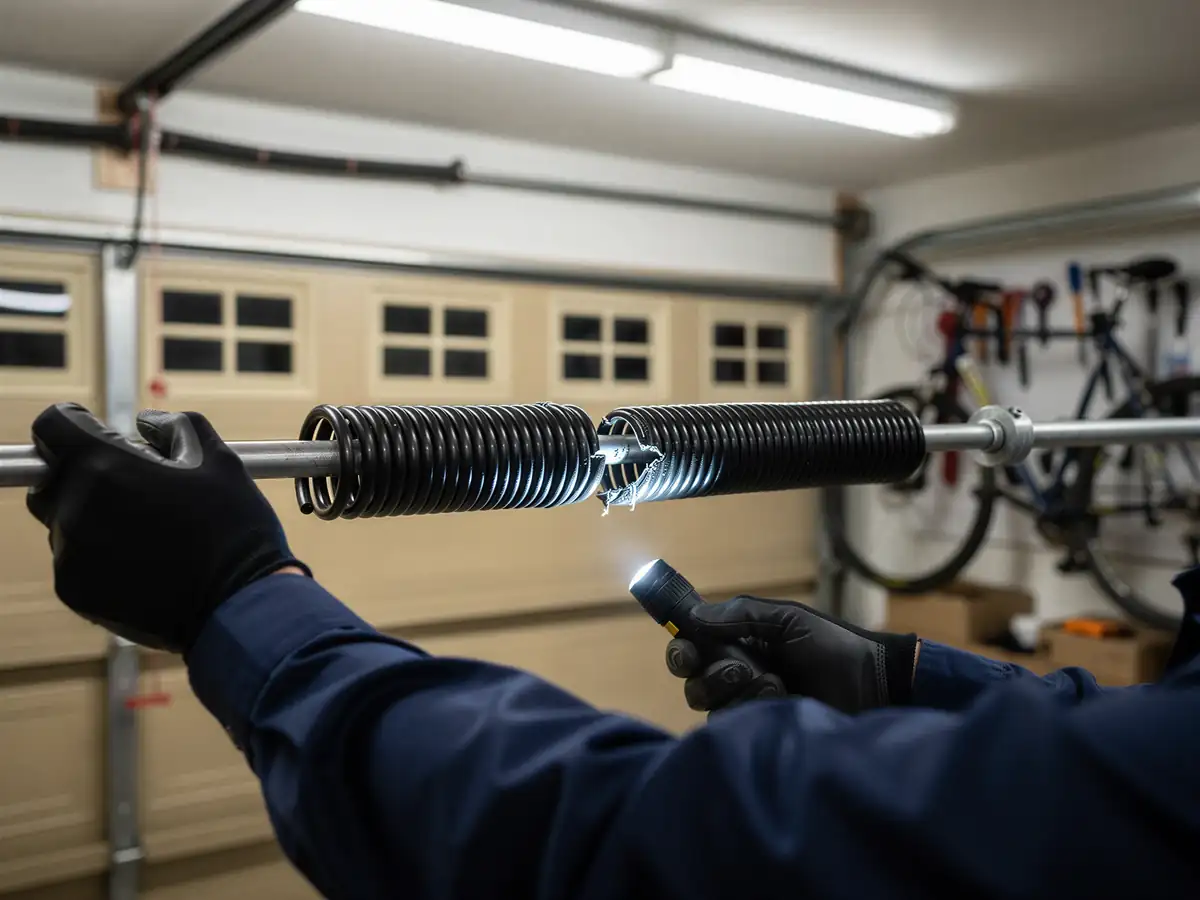
Some owners mistake this for a spring problem because the door feels heavier or jerks on the way up. Worn rollers increase friction along the track, which makes the opener strain and can mask a separate spring issue underneath. We check both on every call, because replacing rollers on a door with a spring that's already going weak just gets you a second visit.
A door that's hopped off true on one side, so one edge rides higher than the other, is usually past the point of a simple roller swap and needs the track realigned too. We'll tell you straight if that's what we're looking at before we start any work.
Stocked Parts
We carry nylon rollers in the stem lengths and bearing sizes that fit the torsion and extension hardware installed across this area - most of it dating to the 1960s and 70s construction boom that built out Woburn and the towns around it. Steel rollers with open bearings, which is what a lot of these original doors shipped with, wear loud and wear fast; we replace them with sealed nylon rollers as a matter of course unless a homeowner specifically wants steel.
We also keep common stem lengths on the truck so we're not ordering a part and coming back a second time for a straightforward roller job. Where a track has worn unevenly from years of a bad roller riding against it, we carry replacement track sections too, since a new roller in a gouged track will just wear out again in a year or two.
What we don't stock is every obscure roller size from every long-discontinued manufacturer. If your door came with a design that stopped being made decades ago, we'll tell you if a direct match is a special order versus something we can substitute with a near-equivalent from stock - and what that means for your timeline.
What the Repair Takes
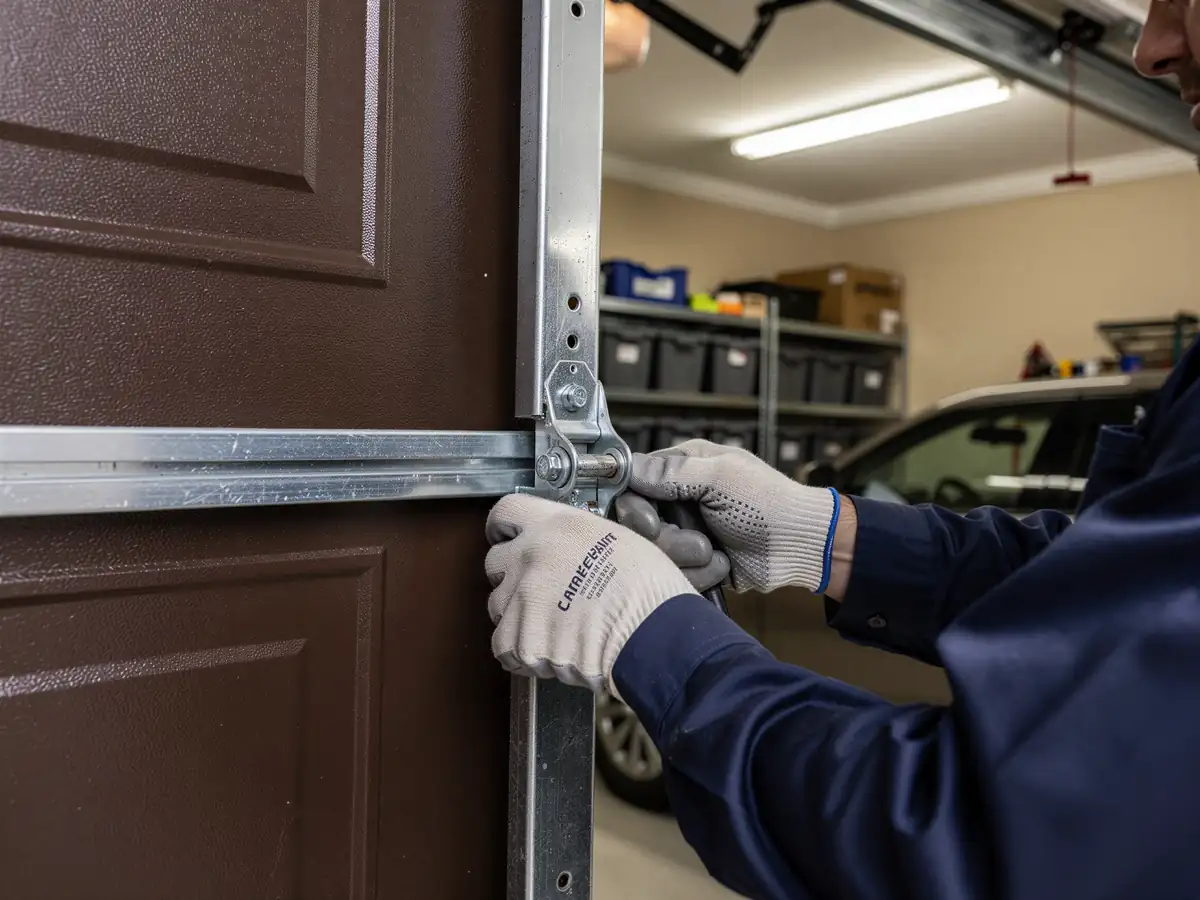
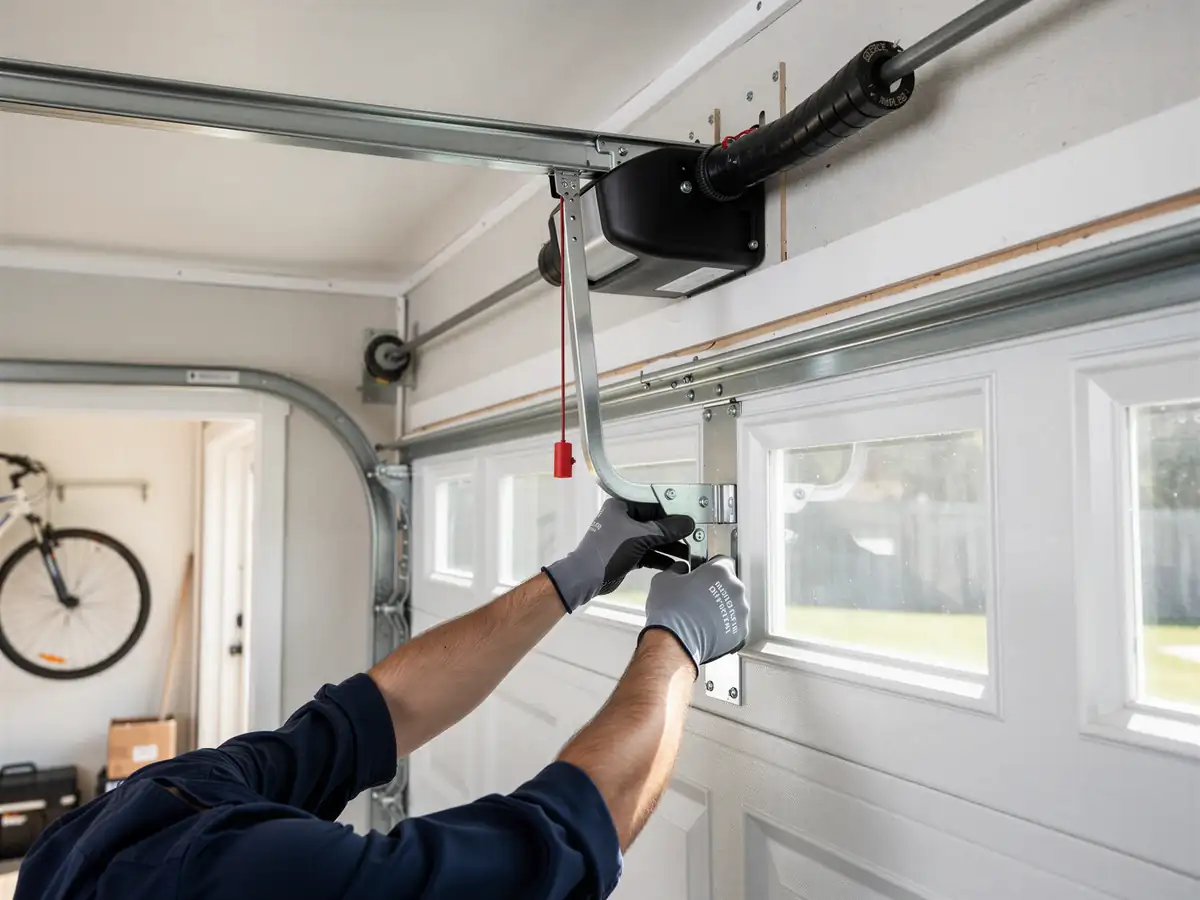
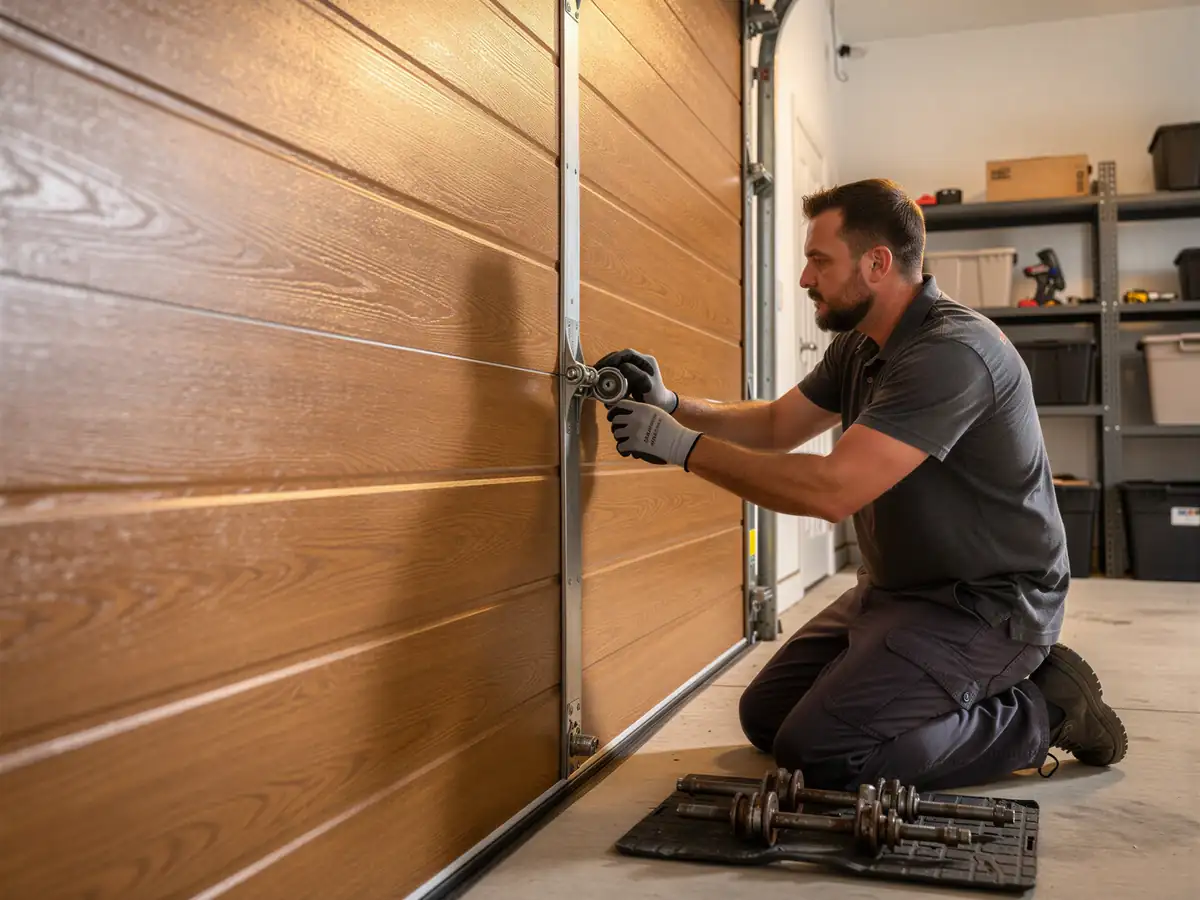
A straight roller replacement on a double door usually means pulling the door section by section
Working one track side at a time so the door never comes off its rail entirely. We check every roller on the door, not just the one making noise, because if one roller failed from age the others on the same door are close behind it.
While the rollers are out, we look at the hinges they sit in
A bent hinge will chew through a new roller just as fast as the old one wore out, so replacing the roller alone without fixing a bent hinge is a repair that doesn't hold. We also check the track bolts and brackets at each roller position, since loose brackets let the track flex and put side load on the roller stem that it isn't built for.
Once new rollers are in, we run the door through a full open-close cycle by hand first
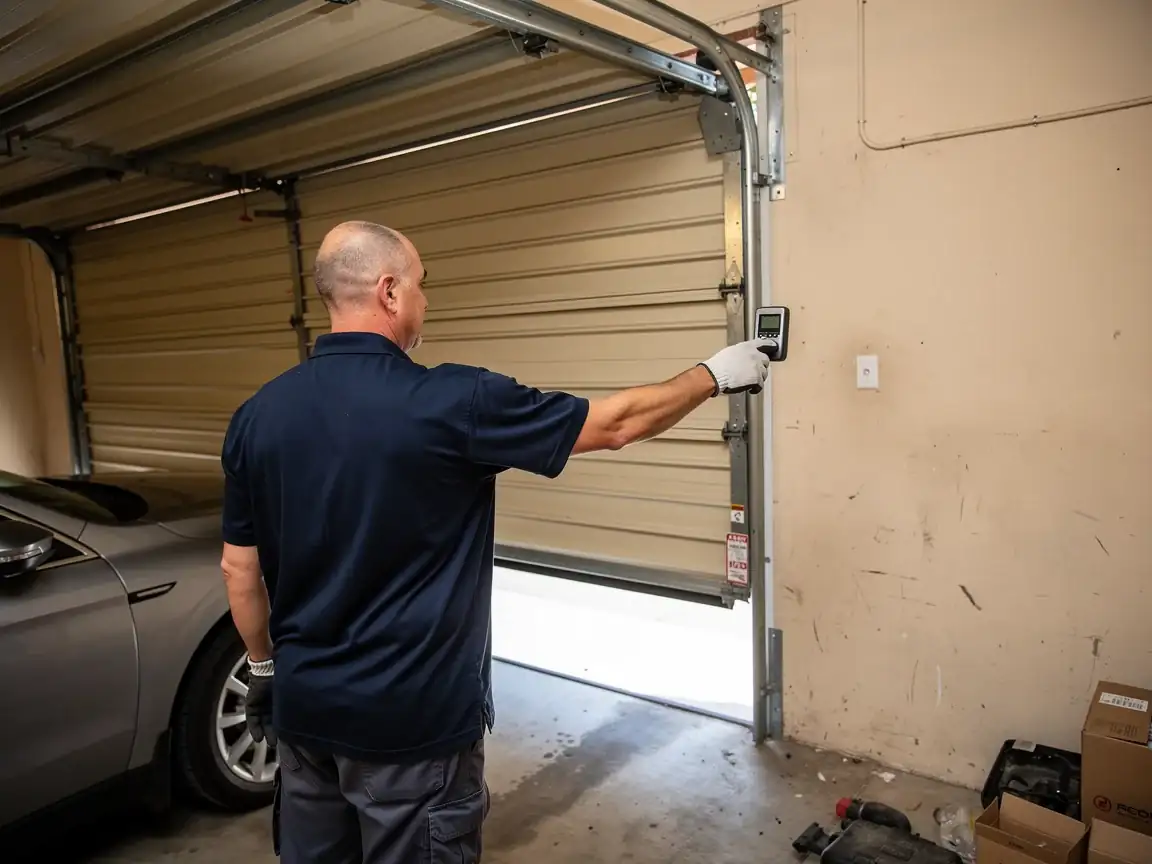
Then on the opener, listening for anything that's still off. A clean roller job should leave the door moving quiet and square. If it doesn't, something else is going on and we'll say so before closing out the call.
Why This Fails Locally
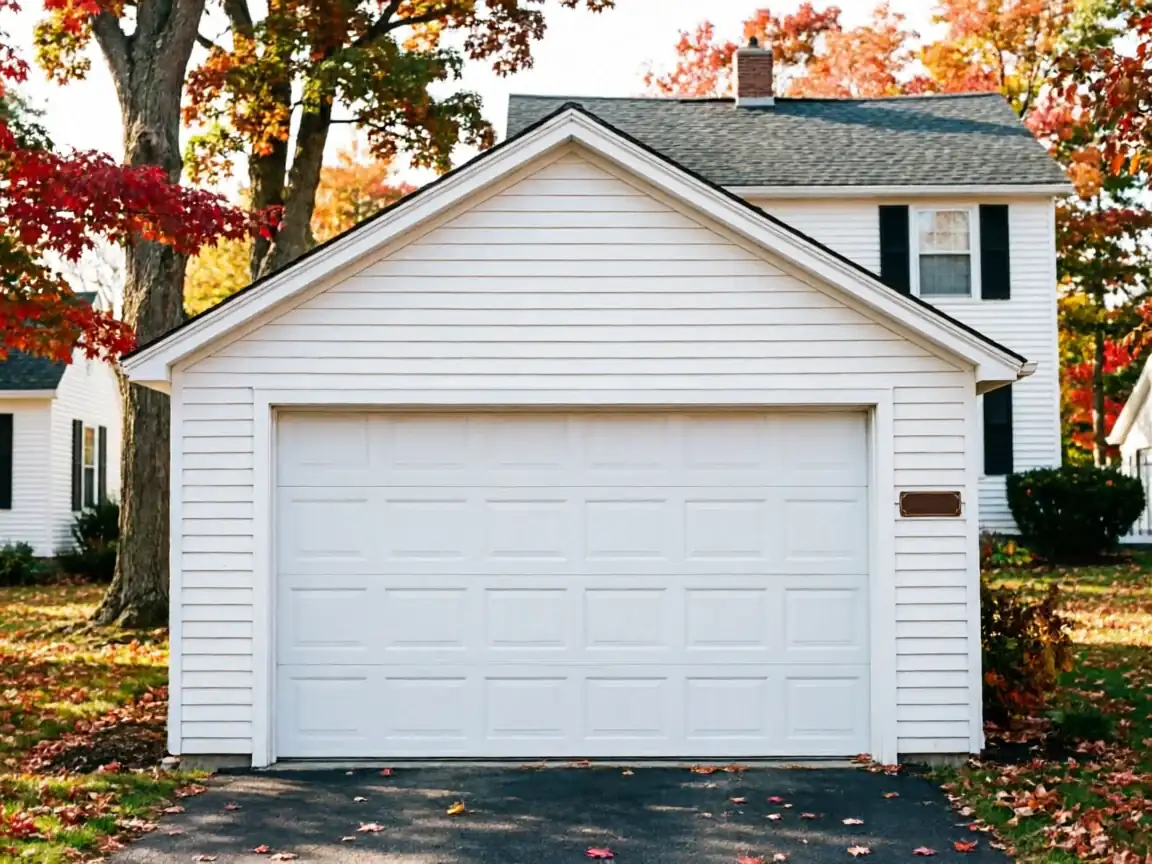
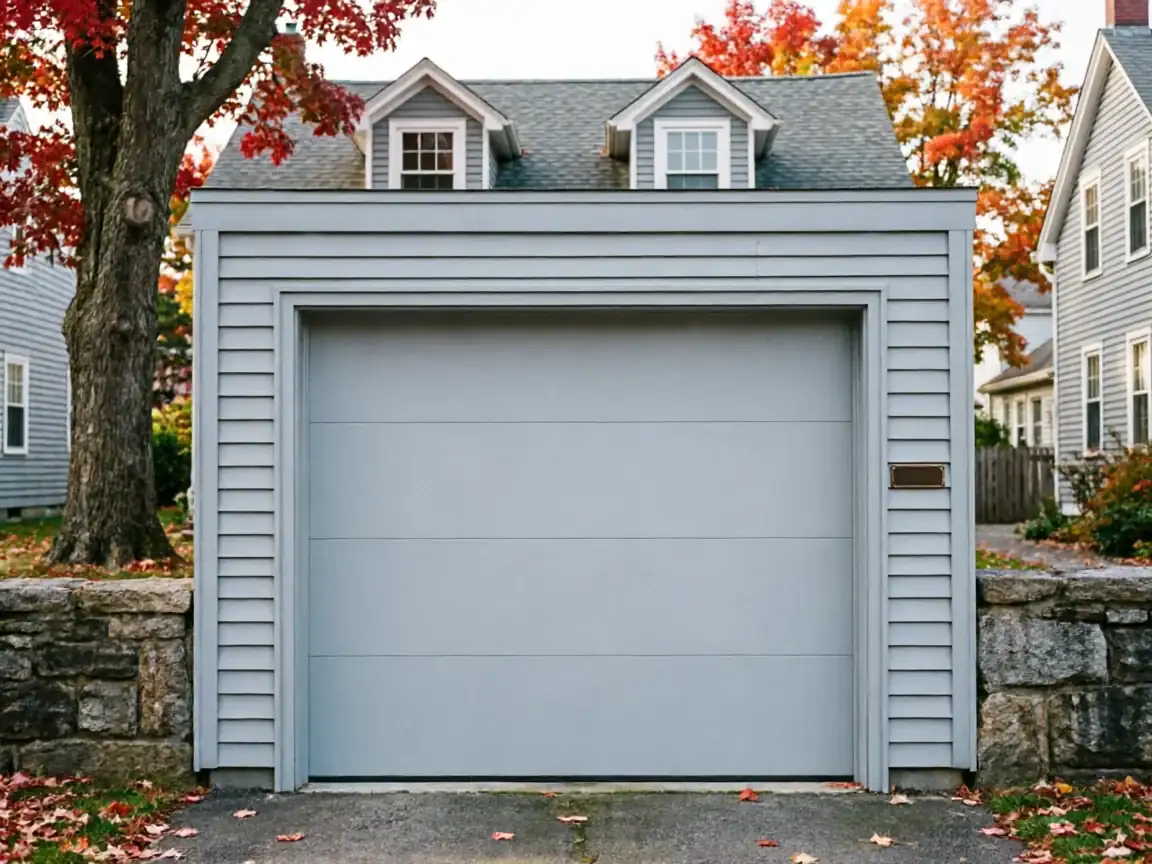
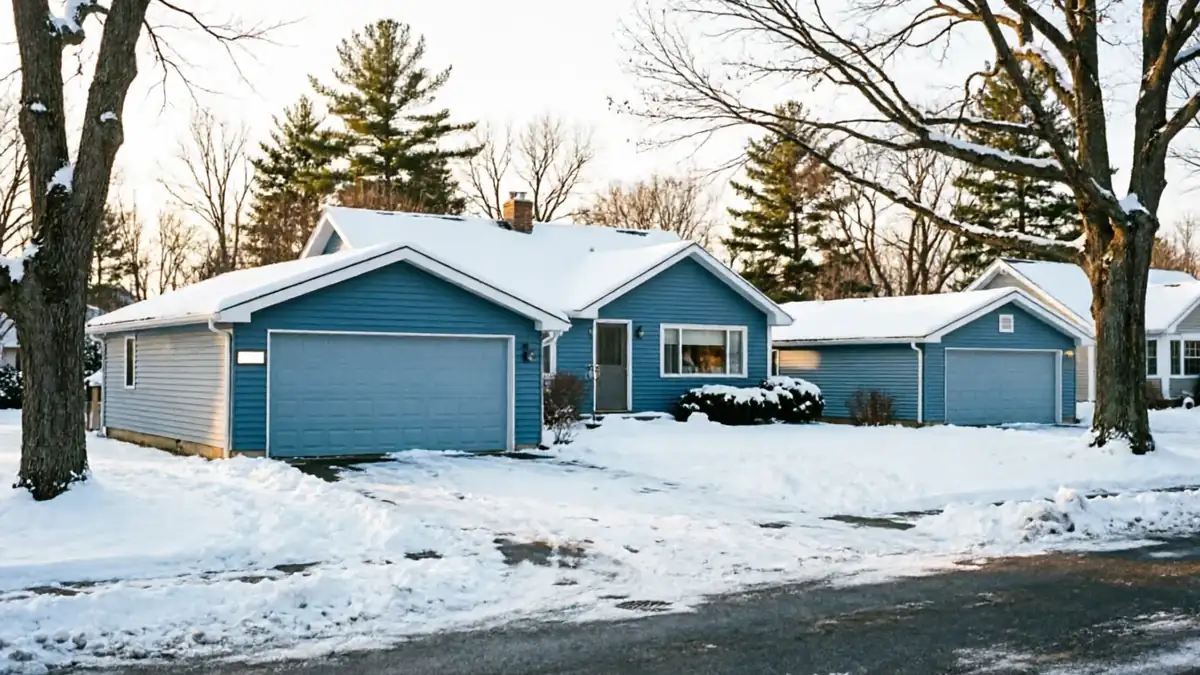
The housing stock across this part of the state was mostly built between 1938 and 1988, with the bulk going up in the 1960s and 70s across the dozens of neighborhoods we cover. That means a large share of the garage doors still in service were installed with the steel rollers and hardware standard for that era - parts designed for a lower-cycle, lower-weather expectation than what they actually face every winter.
This region sits in a severe cold climate band, and steel rollers with open bearings don't tolerate that well. Moisture gets into the bearing, freezes and thaws through the winter, and the roller starts binding and chipping from the inside before it ever looks visibly worn. Nylon handles that cycle better, which is why it's become the standard swap rather than a steel-for-steel replacement.
It's also why roller failure clusters seasonally here - late fall through early spring is when we see the volume jump, as hardware that's been slowly degrading all year finally seizes or cracks in the cold. A roller that's merely noisy in October is often one that fails outright in January.