The Symptom
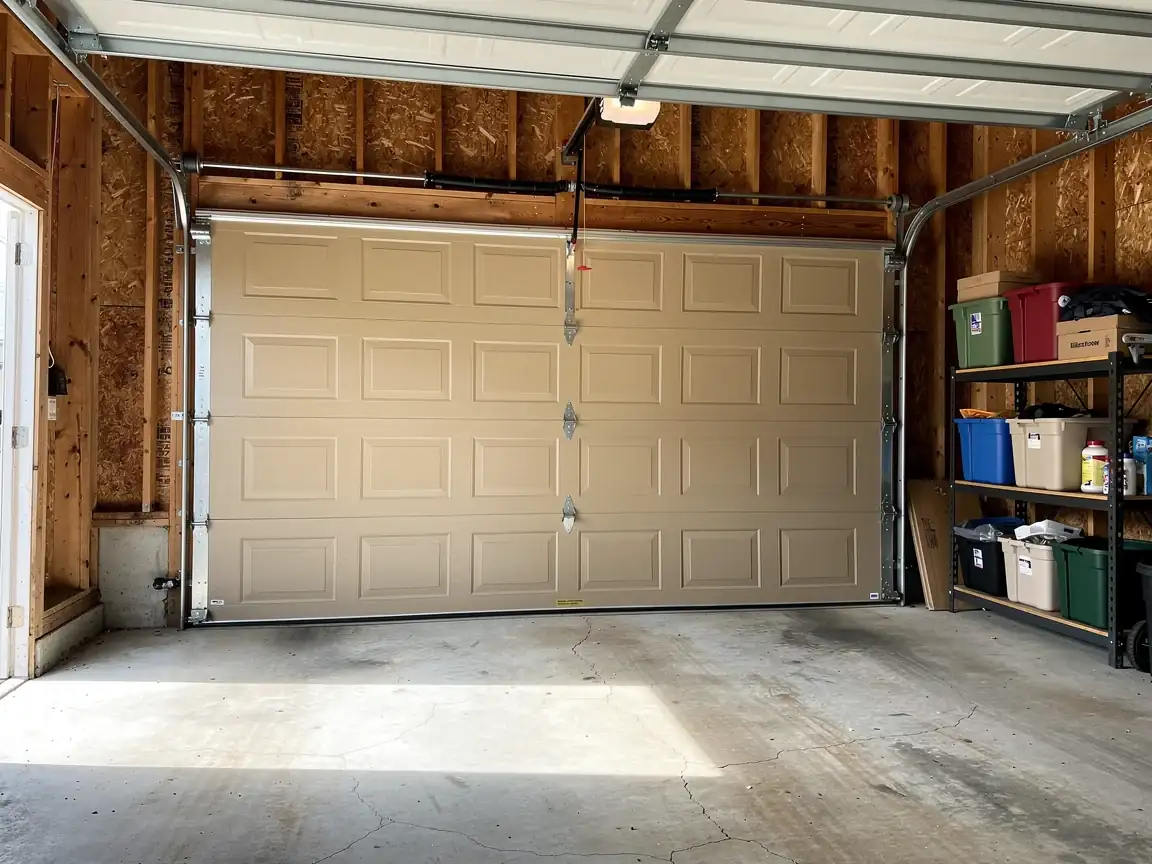
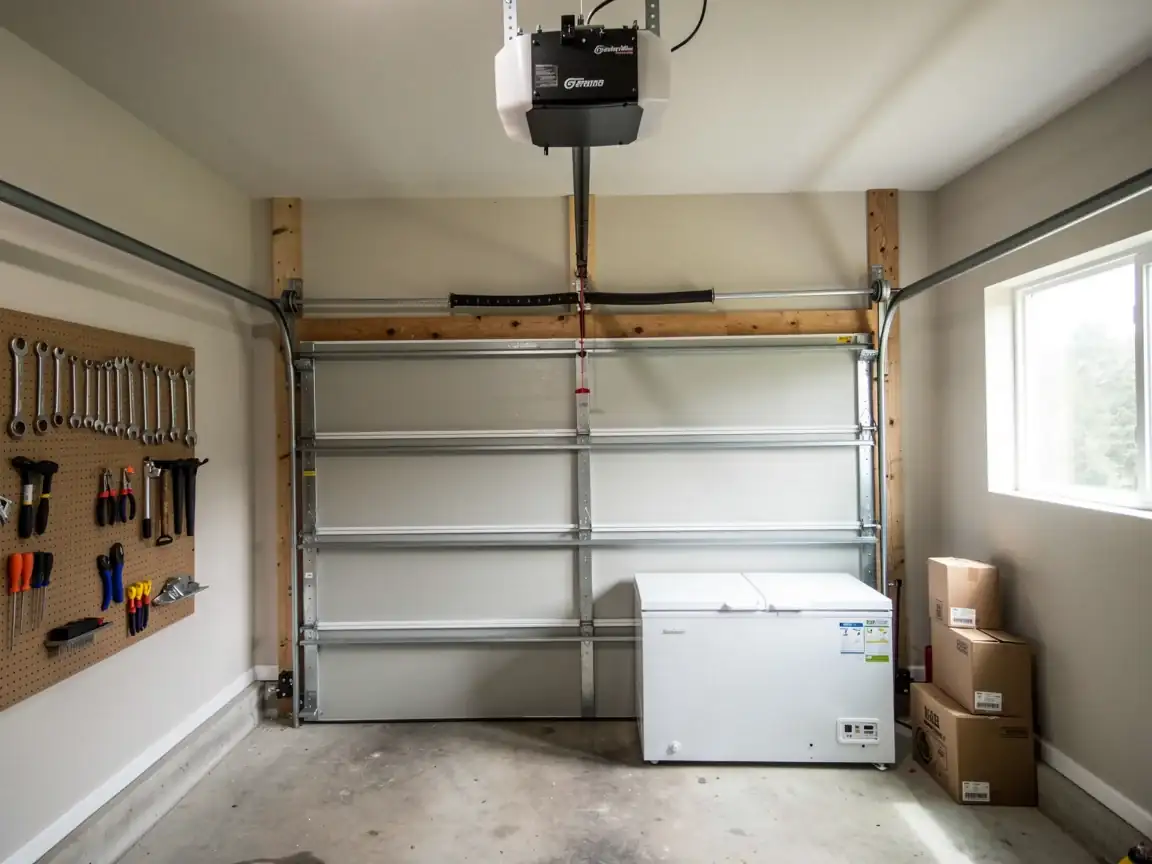
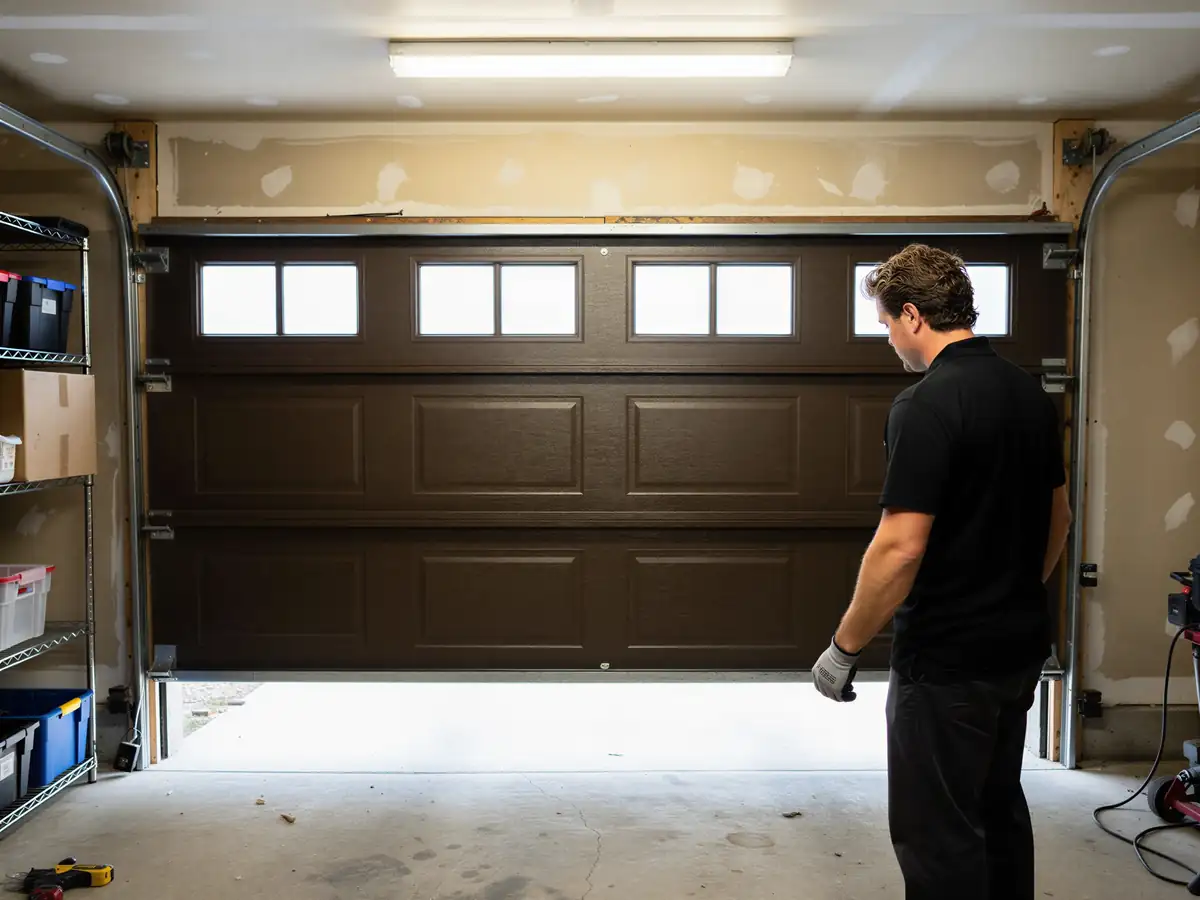
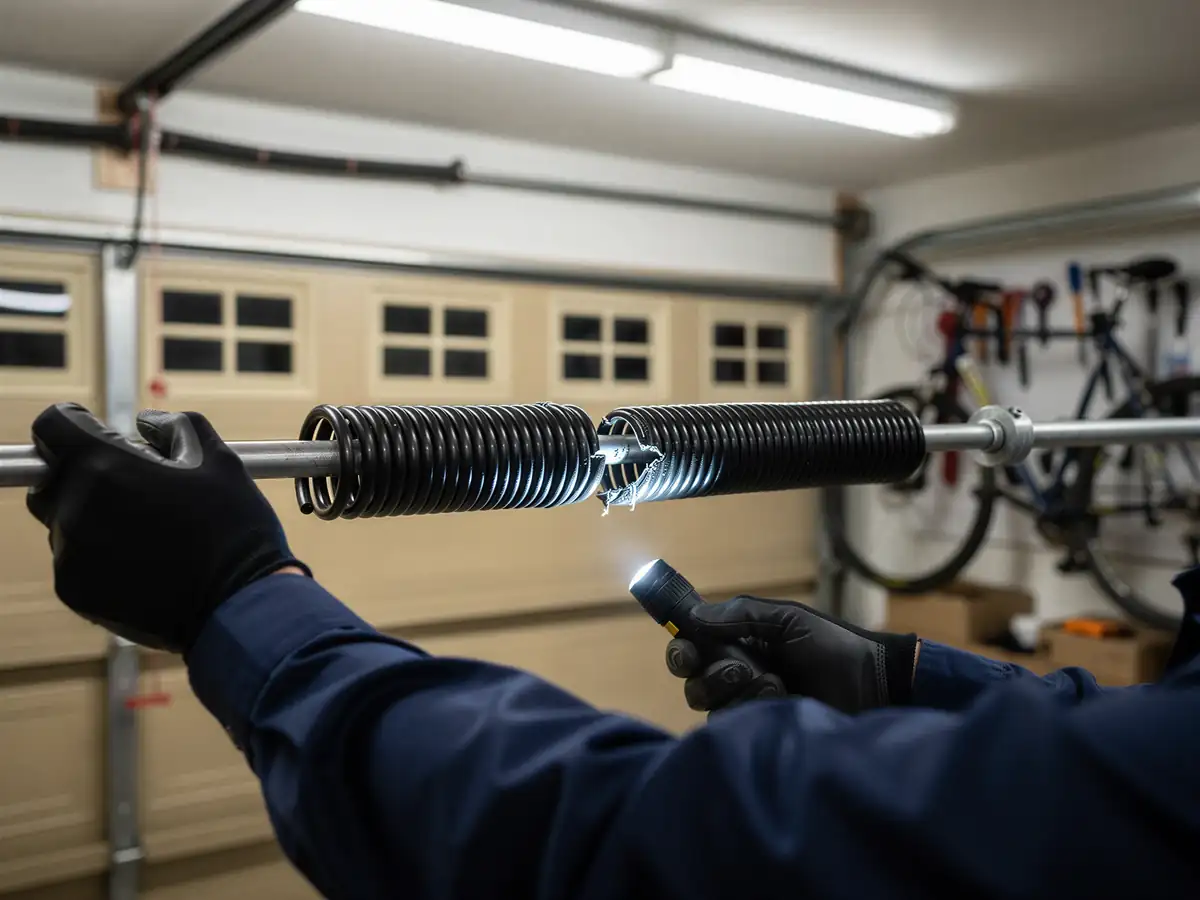
The door won't lift, or it lifts six inches and stops. Maybe you hear a bang from the garage overnight and in the morning the door is stuck halfway, cables slack on one side. That's a broken torsion spring, and on most houses around Woburn it happens in the cold, not the heat.
Houses here were mostly built between 1938 and 1988, with the bulk going up in the 1960s and 70s. That means a lot of original builder-grade torsion hardware is still in service, decades past when it should have been swapped. The spring doesn't wear out evenly - it loses tension bit by bit for years, then one cold morning it snaps clean. The door feels fine the night before and immovable the next day.
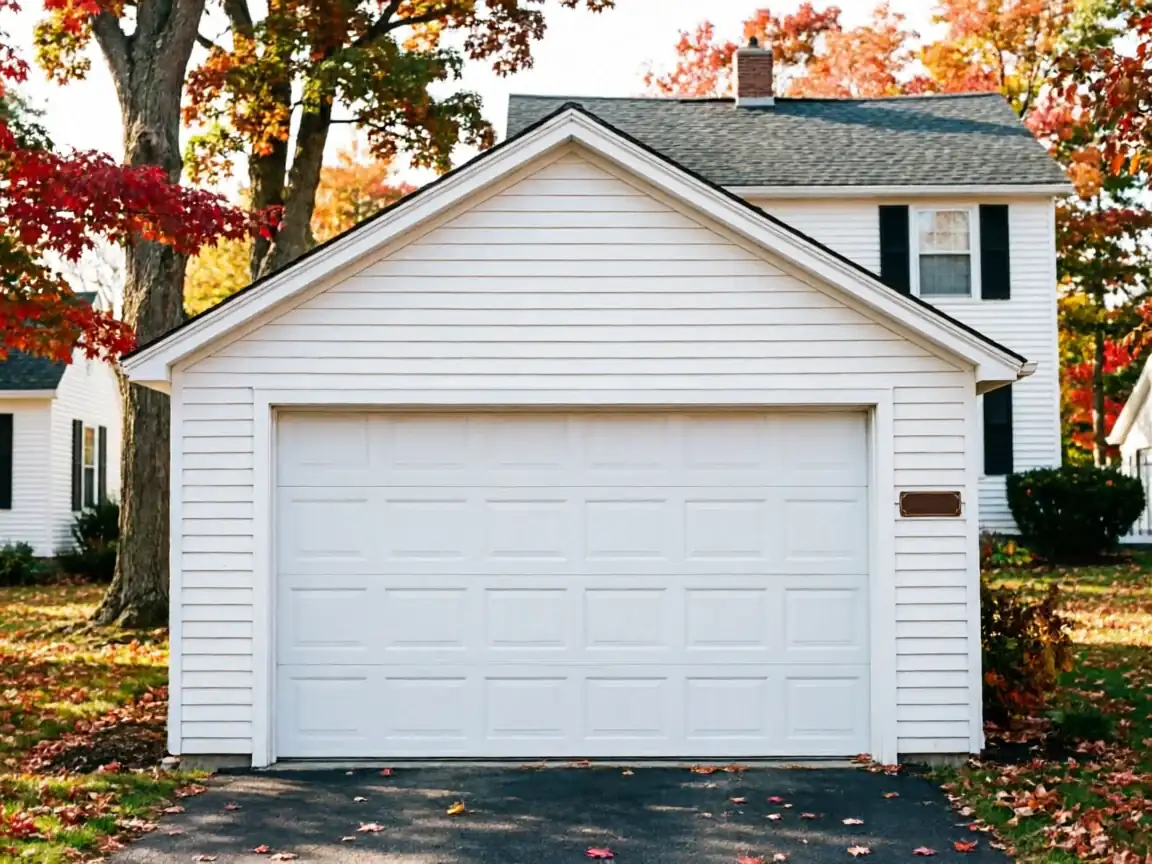
A single door usually runs one spring. A double door built in that era commonly runs two, and if only one has gone, the door will still try to open crooked, binding in the tracks, before it stops. If you're hearing a grinding noise instead of a bang, that's more likely a roller, and that's a different call than a spring.
Stocked Parts
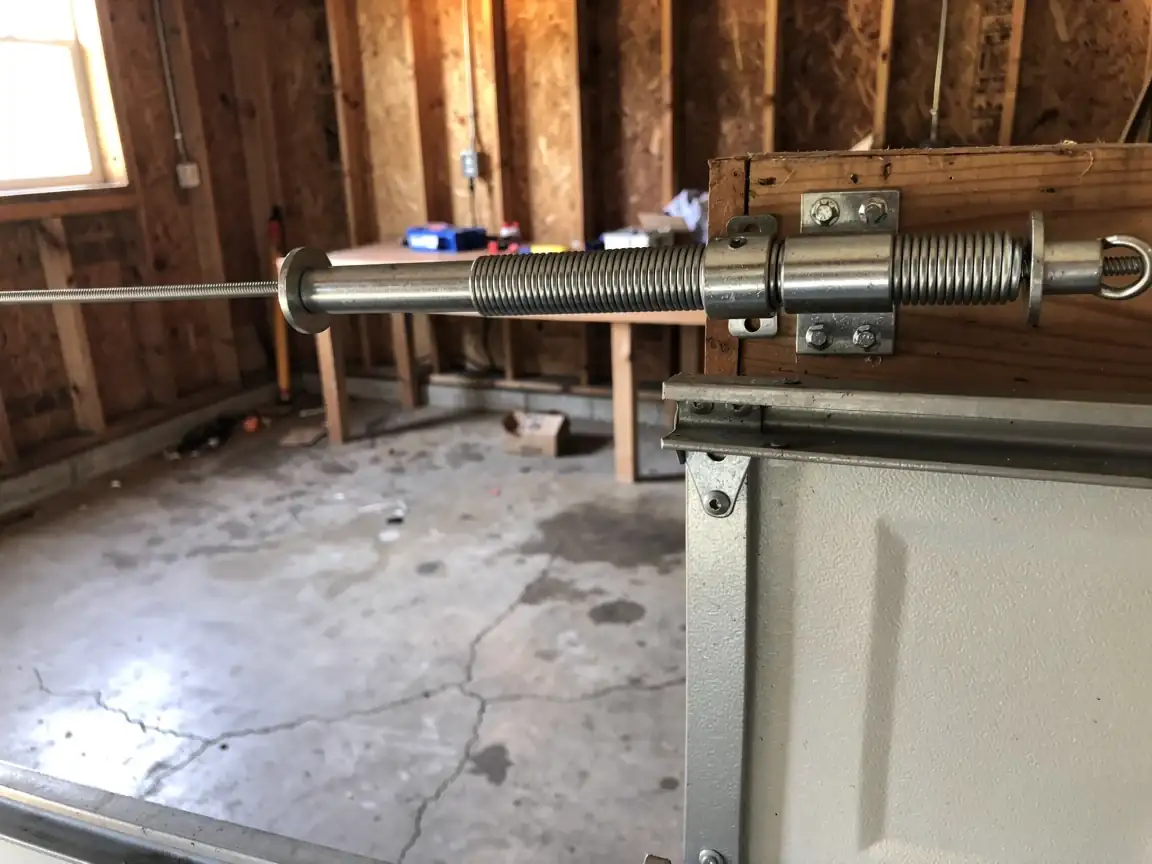
We carry torsion springs sized to the shaft and drum combinations that show up again and again in houses from this era - the stuff builders used across the 1960s and 70s runs, not a universal size that fits nothing exactly. That's why a same-visit fix is realistic here instead of a special-order wait.
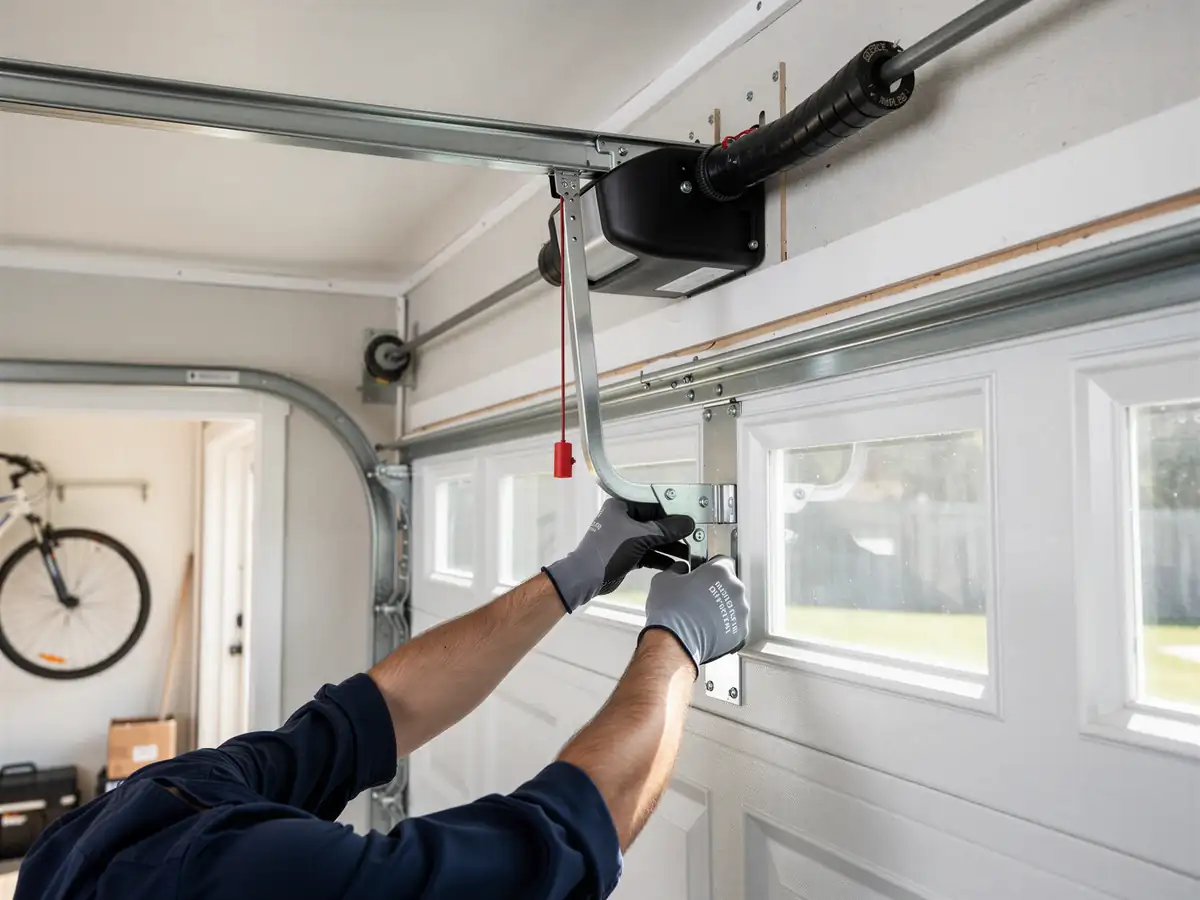
We also carry standard-width tracks, rollers, and the cable gauges these older setups use. Openers are a different story - if yours is original to a 1960s build, the motor and rail mount are long discontinued, and we're matching a modern unit to an old header rather than finding the exact part.
Honest limit: some double-door torsion setups on wider openings use heavier-gauge springs we don't keep on the truck in every size. If your door is an unusual width - wider than the typical two-car bay from that period - we may need a day to get the right spring in rather than force a close-enough substitute onto your hardware. We'd rather tell you that up front than install the wrong spring.
What the Repair Takes
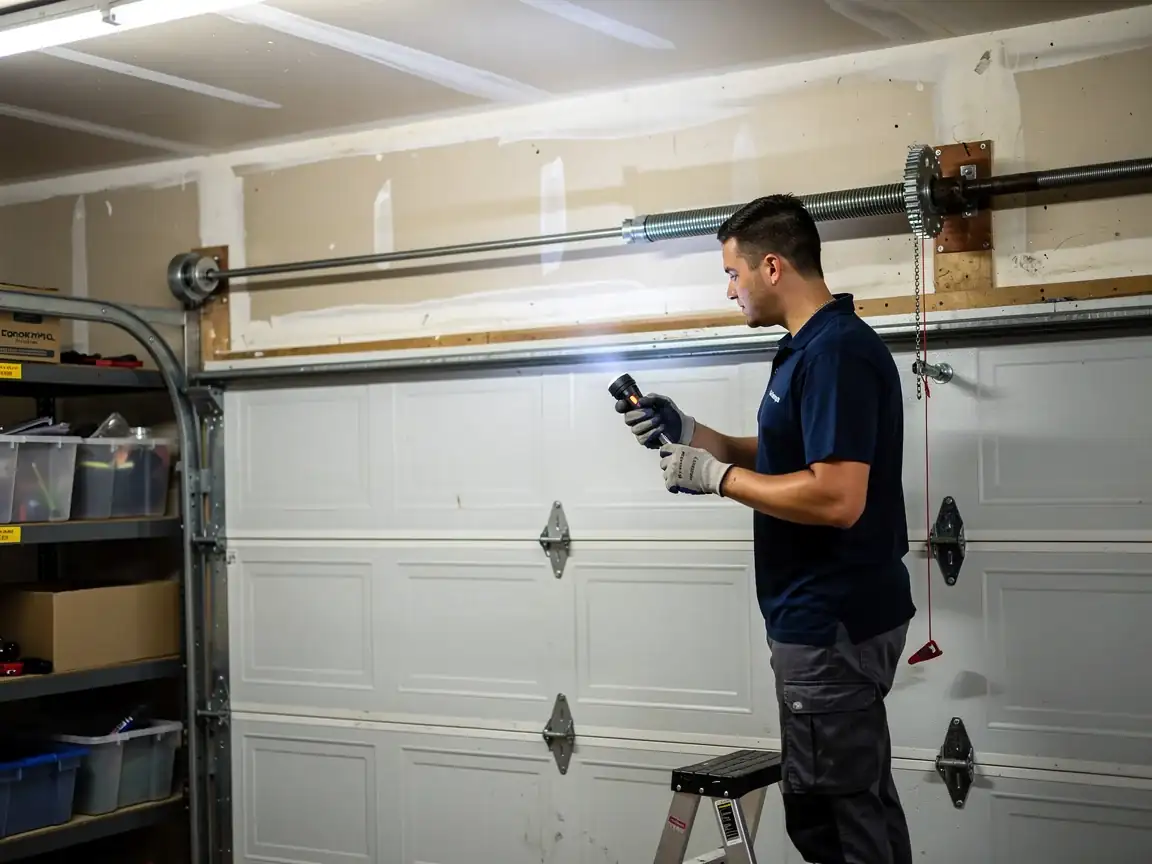
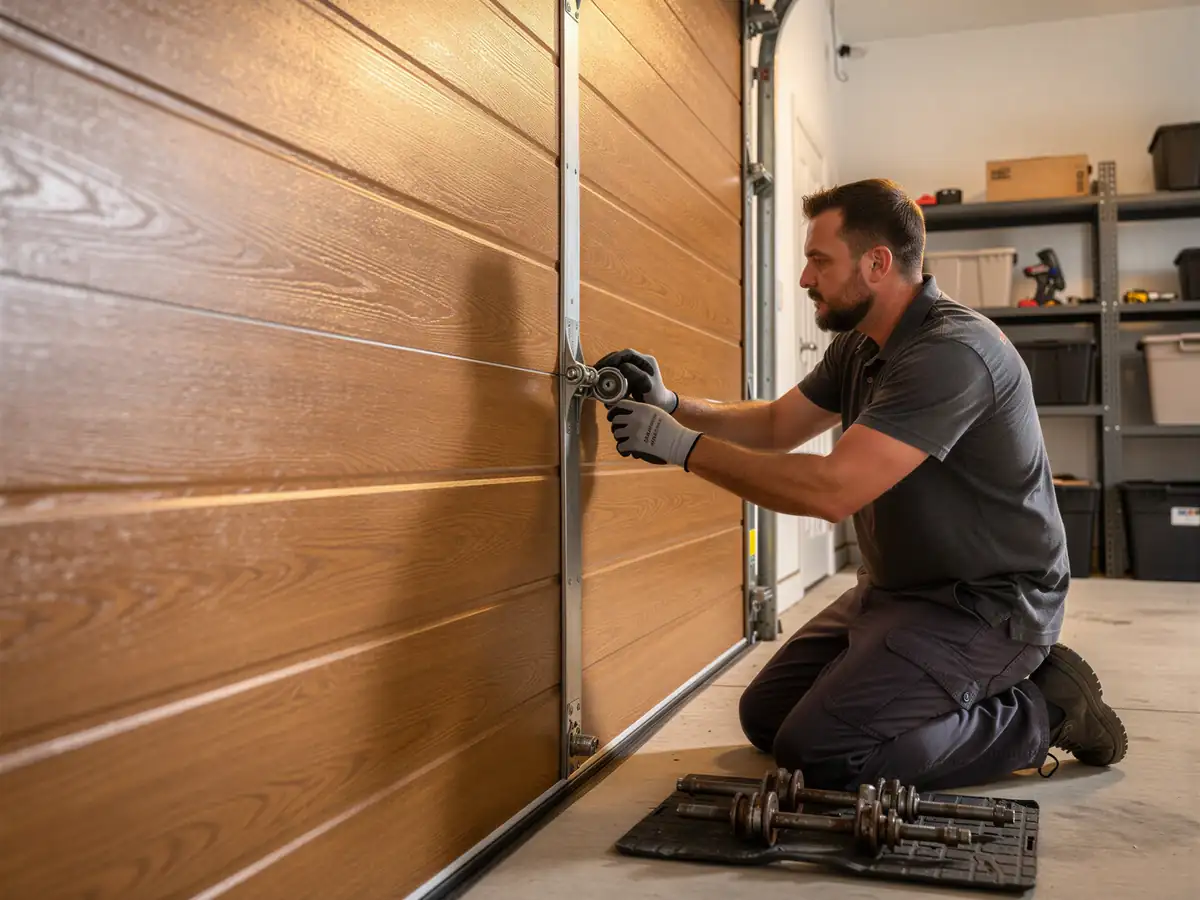
A straightforward torsion spring swap on a single door is a bar-and-winding-cone job
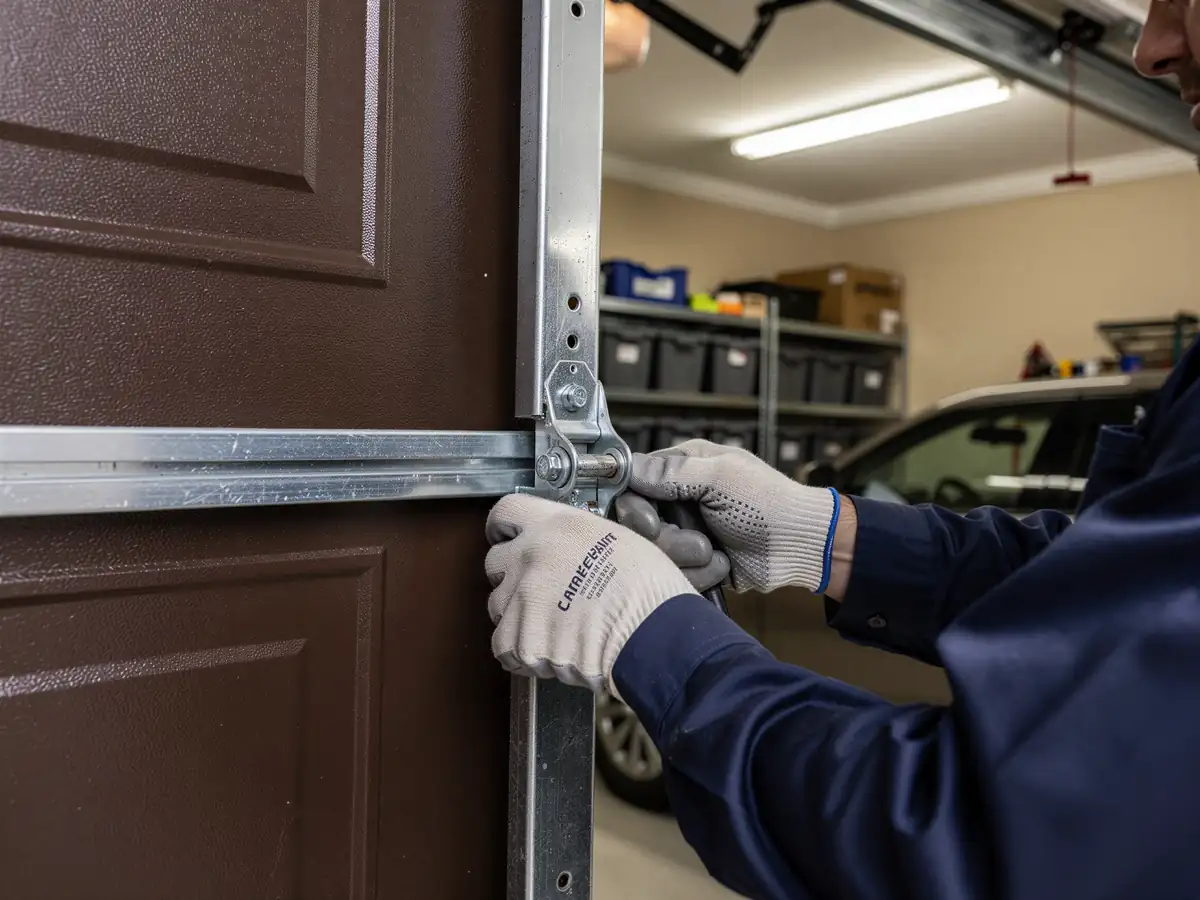
Unwind what's left of the broken spring under tension, pull both ends, install the matched replacement, and wind it back to the correct number of quarter-turns for your door's weight and track length. On a double door with two springs, both usually get replaced together even if only one broke, because the surviving spring is close behind it in age and tension loss.
We check the cables, rollers, and the lift drums while the spring is off
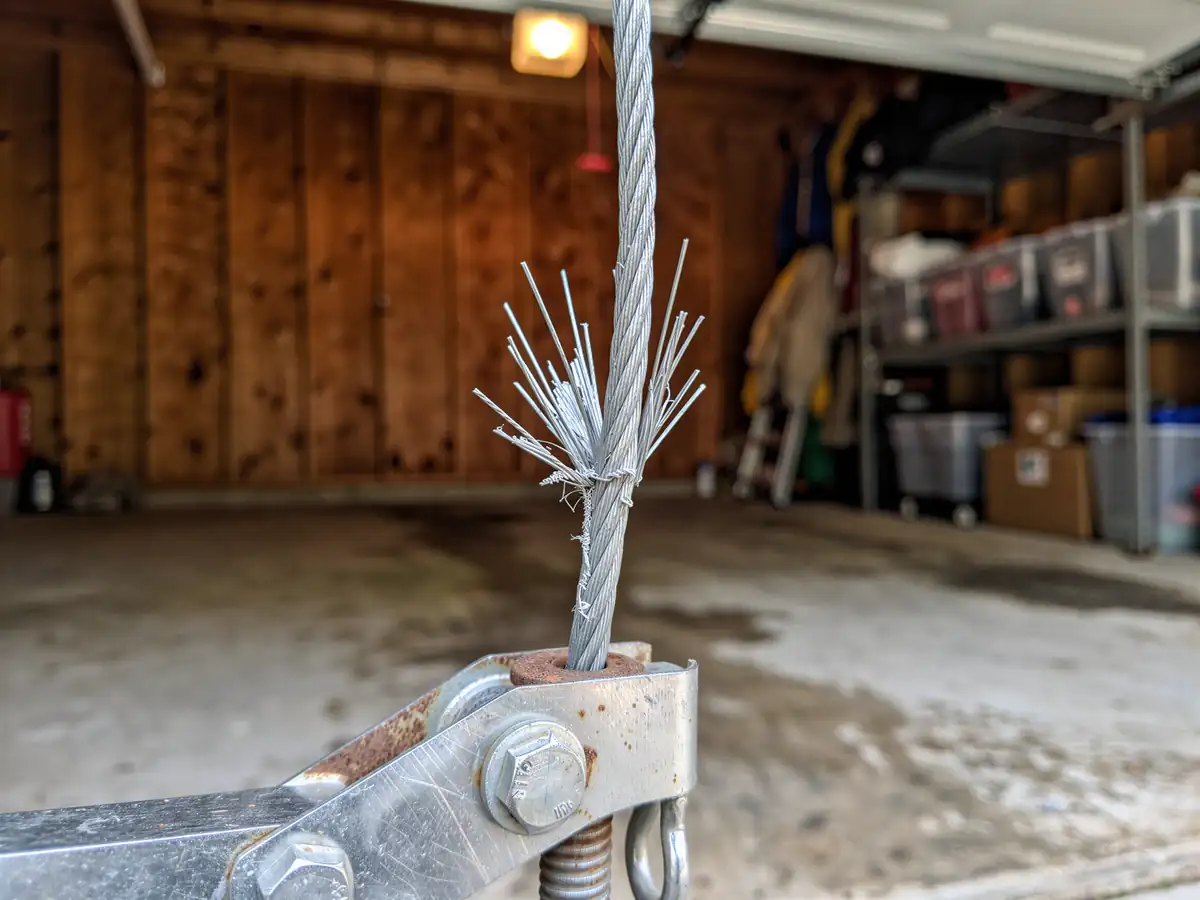
Since that's the only time they're fully accessible without taking the door down again later. A cracked drum or a frayed cable on 1960s-era hardware isn't rare, and catching it in the same visit saves a second truck trip.
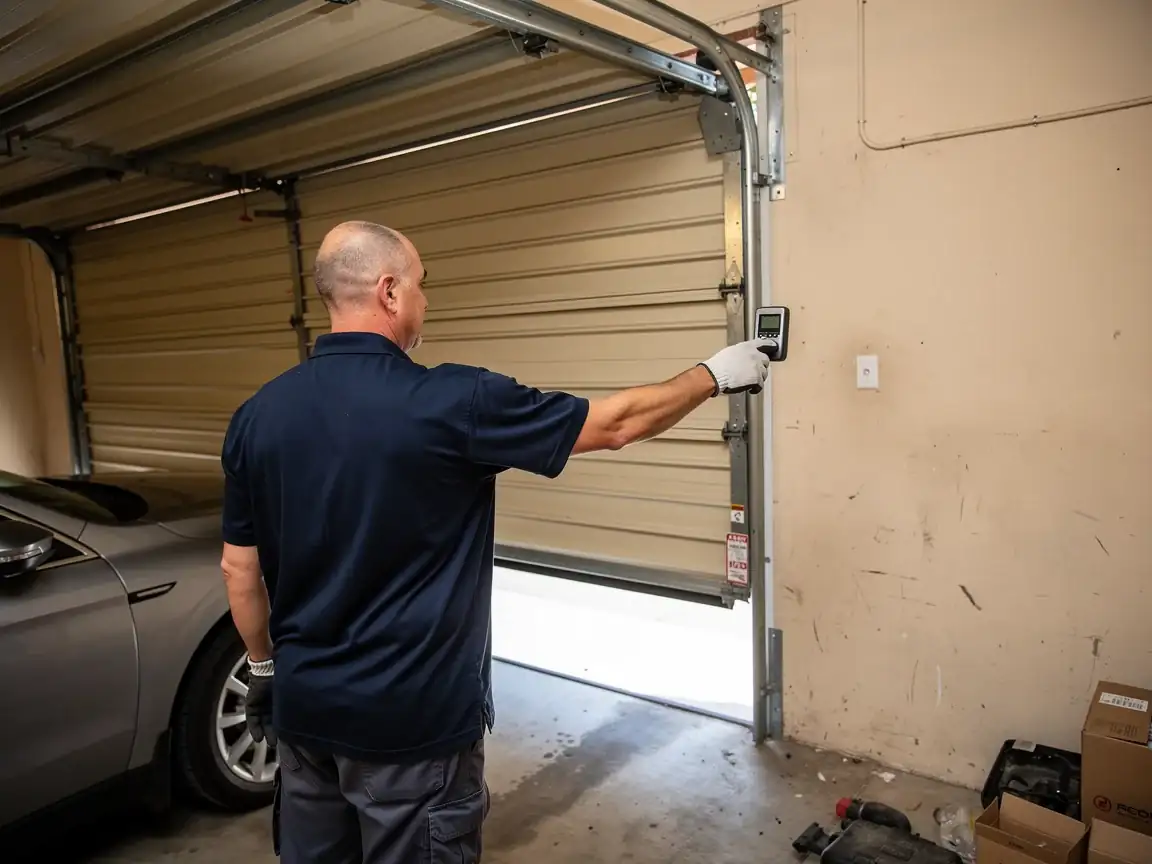
Once the new spring is wound and the door is balanced
Meaning it stays put at waist height without the opener holding it - we run it through a full open-close cycle and check the auto-reverse if there's an opener attached. On a standard setup this is usually done in one visit.
Why This Fails Locally
Most garage doors around Woburn went up on houses built between 1938 and 1988, with the bulk from the 1960s and 70s - and that generation of door came with torsion springs sized to builder-grade specs nobody upgraded since. Metal fatigue in a torsion spring is cumulative, and cold makes brittle steel let go faster than it would in a mild climate.
Woburn and the towns around it - Winchester two miles out, Burlington three, Stoneham three - sit in the same cold-severe climate band, and houses in Winchester, Burlington, Stoneham, and Reading share the same 1960s-70s builder stock as Woburn, which is why the torsion springs we stock cover that narrow range of shaft and drum sizes rather than a wider catalog. With 199,043 owner-occupied houses in this service area, a lot of them are hitting the age where the original spring, cable, or opener is overdue for failure, whether or not a homeowner has noticed yet. The median household here sits around $152,014, which is part of why most jobs run to full replacement of worn hardware rather than patching around it piece by piece.