What the Weather Here Does to It
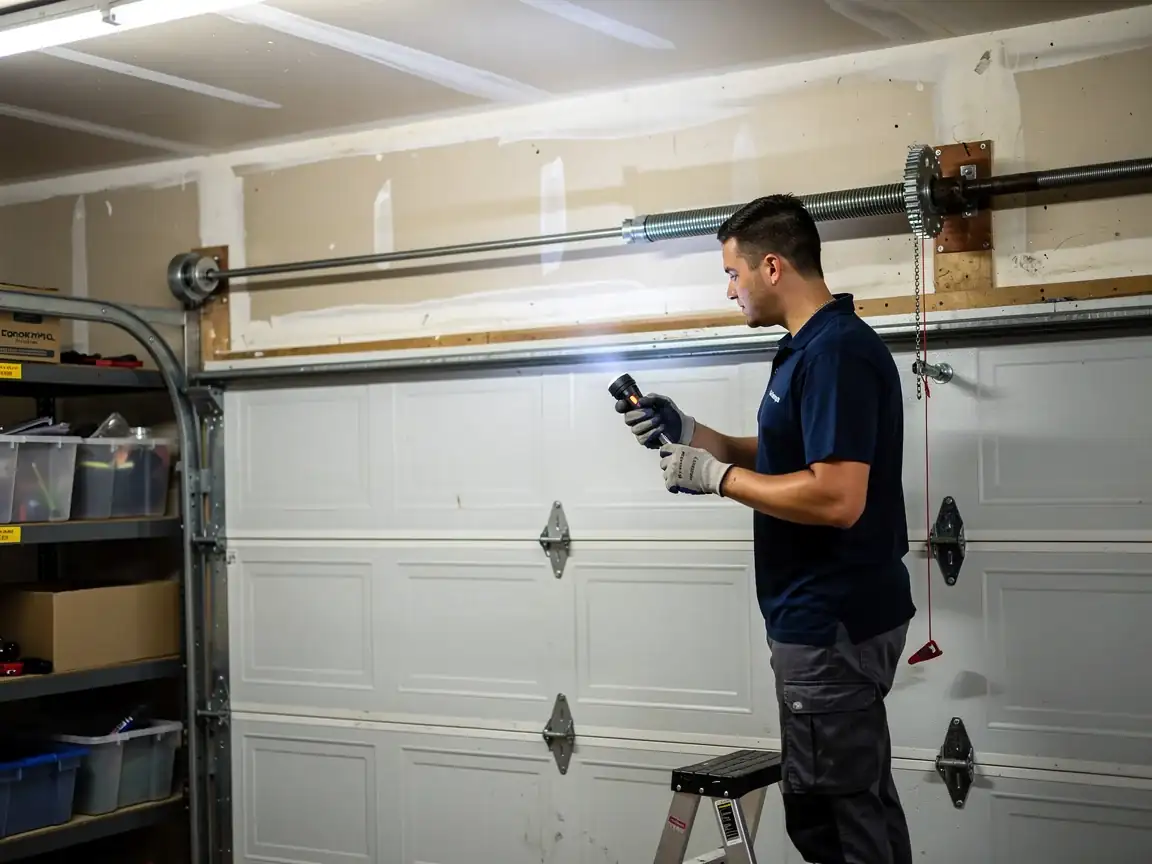
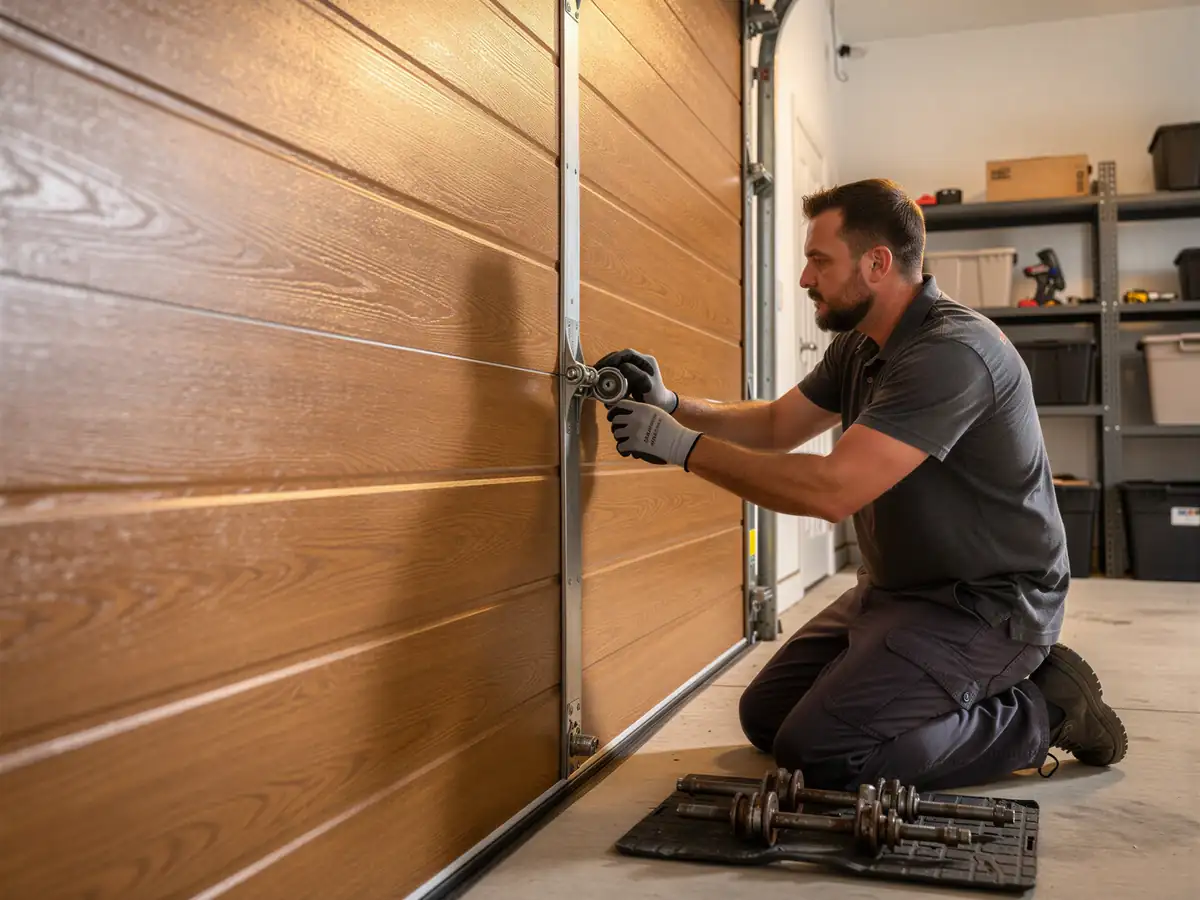
Woburn sits in a severe cold climate band, and that matters more to a garage door than people think. Steel track contracts in deep cold, and on houses with the original hardware - a lot of them, given how old the stock is here - that contraction is enough to pull a bracket a quarter inch out of alignment. You won't see it happen. You'll just notice one morning that the roller is riding on the edge of the rail instead of inside it.
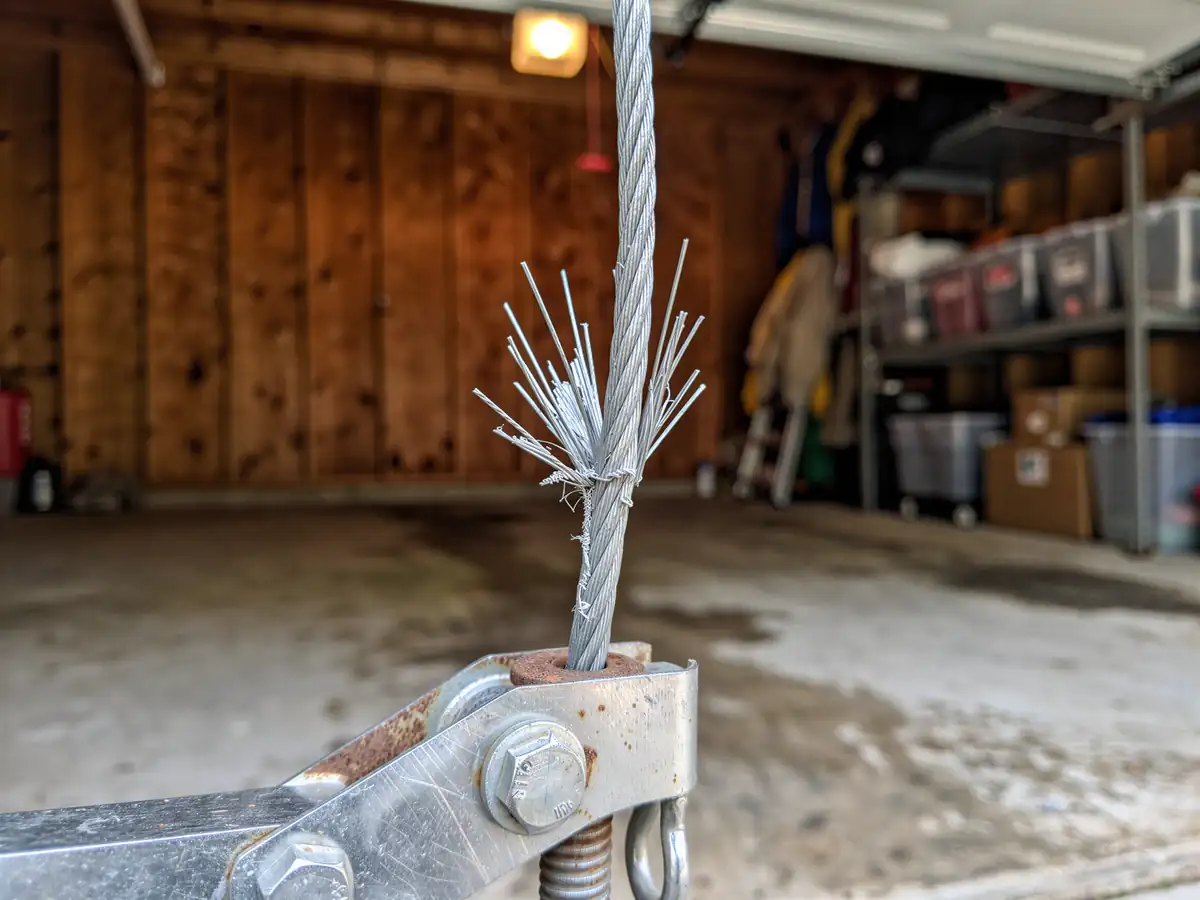
Grease is the other half of it. Old rollers packed with the lubricant that came with the door in, say, 1965 turn gummy below freezing. A door that closed smooth the night before binds halfway down, the opener keeps pulling, and the cable yanks the roller sideways off the track. This isn't rust and it isn't age alone - it's cold acting on parts that were never built to flex back after decades of thermal cycling.
Salt and slush off car tires add grit to the bottom few feet of track, which accelerates the wear right where the door takes the most stress opening and closing. None of this is dramatic. It's slow, and it adds up every winter until the day the door finally jumps.
The Situation
Housing in this service area went up mostly between 1938 and 1988, with the median around 1965, and most of what's standing dates to the 1960s and '70s across the named neighborhoods that make up the area - whether your street is close in toward Winchester or farther out past Wilmington. That matters for garage doors specifically: single-track steel systems from that era used lighter gauge rail and fewer mounting points than what gets installed today.
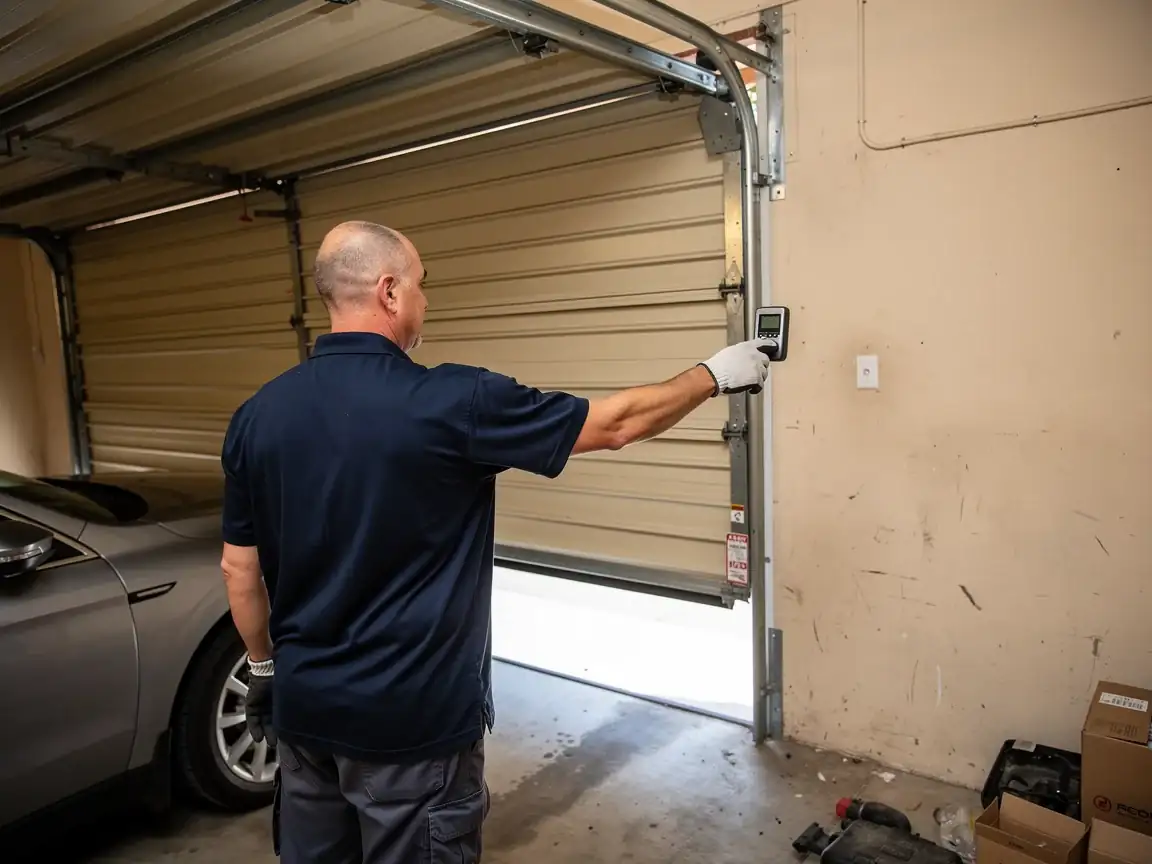
Over fifty, sixty years, foundations settle. A garage built as part of the original house, or added on a few years later, has had decades for the slab to shift even slightly. That shift pulls the vertical track out of plumb at the bottom, which is the single most common reason a track separates from the jamb on houses of this age. You can often see it without tools: stand at the side of the door and sight down the track. If it bows away from the frame near the floor, that's settling, not a broken part.
Newer construction doesn't have this problem yet, which is part of why it shows up so consistently on the older end of the stock and rarely on anything built in the last twenty years.
When to Call Someone
Call before you force anything
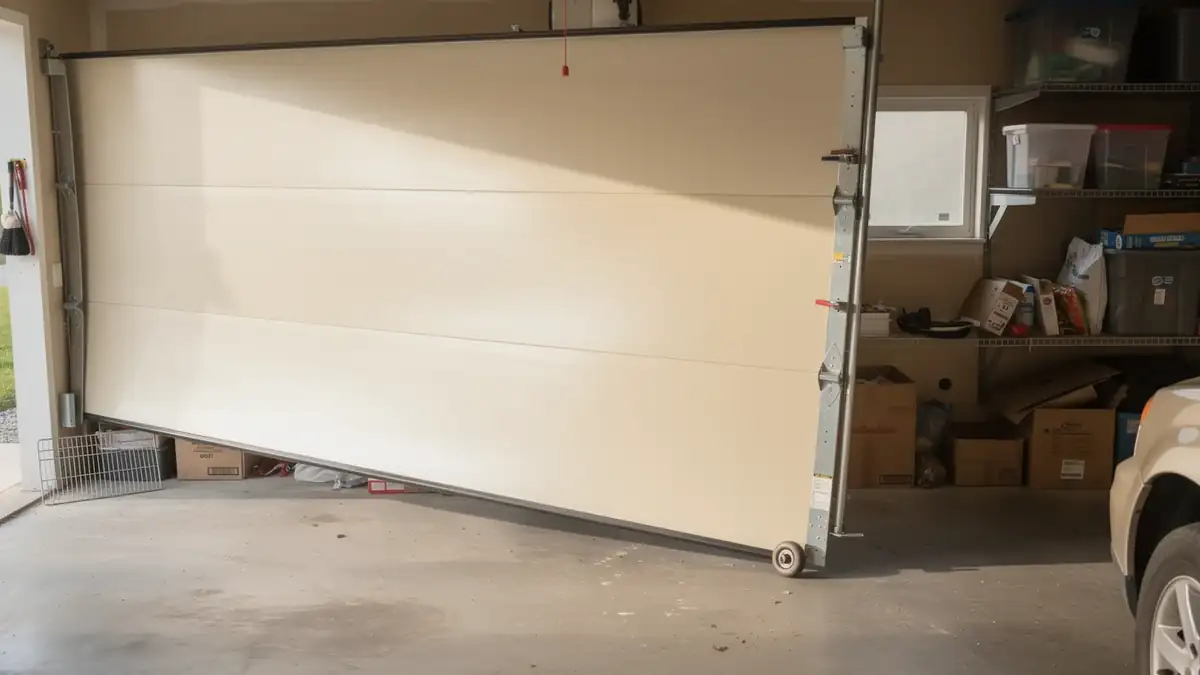
If a roller has jumped the track and the door is stuck halfway, don't keep hitting the opener button - that's how a cable frays or a panel bends, and what started as a bent track turns into a door replacement.
Call right away if
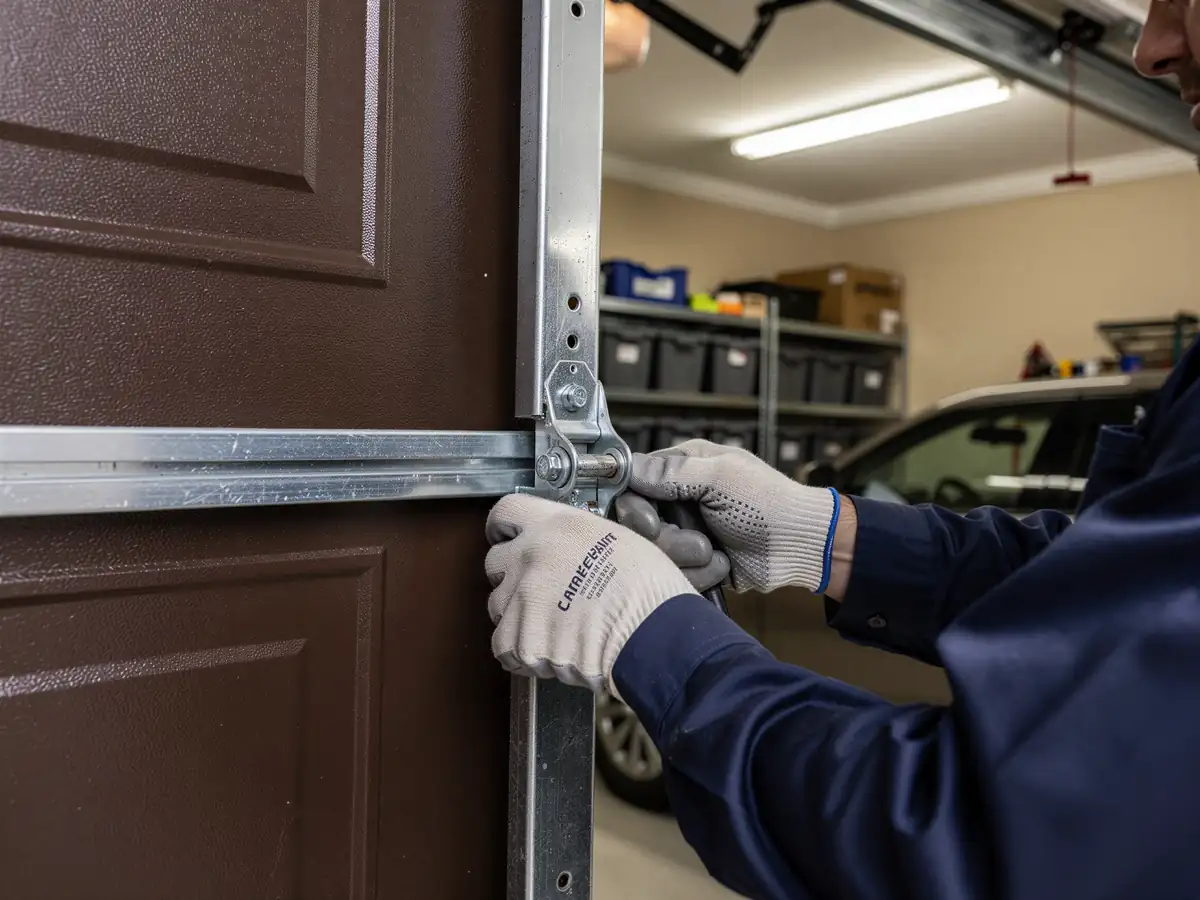
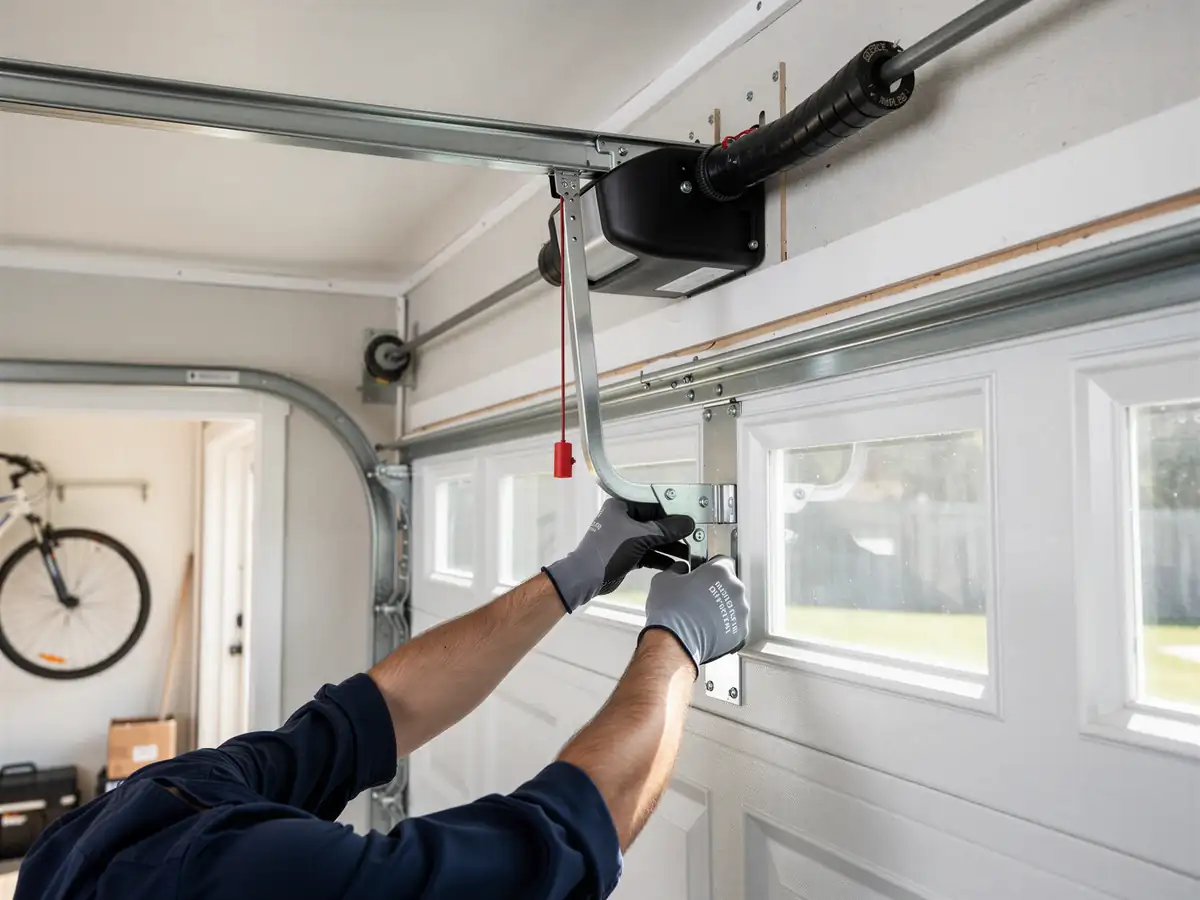
The door is off track on one side and won't move either direction, a cable has visibly frayed or snapped, the track itself is bent or pulled away from the wall bracket, or the opener is straining against resistance you can hear from outside. On houses with original hardware from the 1960s-70s stock common around here, a bent section of track usually means the whole run on that side needs replacing - patching one bracket rarely holds for long once the rail has started to walk.
Also call if the door came off track more than once this season
One incident can be cold and bad luck. A repeat means something structural - a settled slab, a worn bottom roller, a bracket that's lost its grip in old wood jamb - and that's worth a proper look rather than another shove back into place.
When Waiting Is Fine
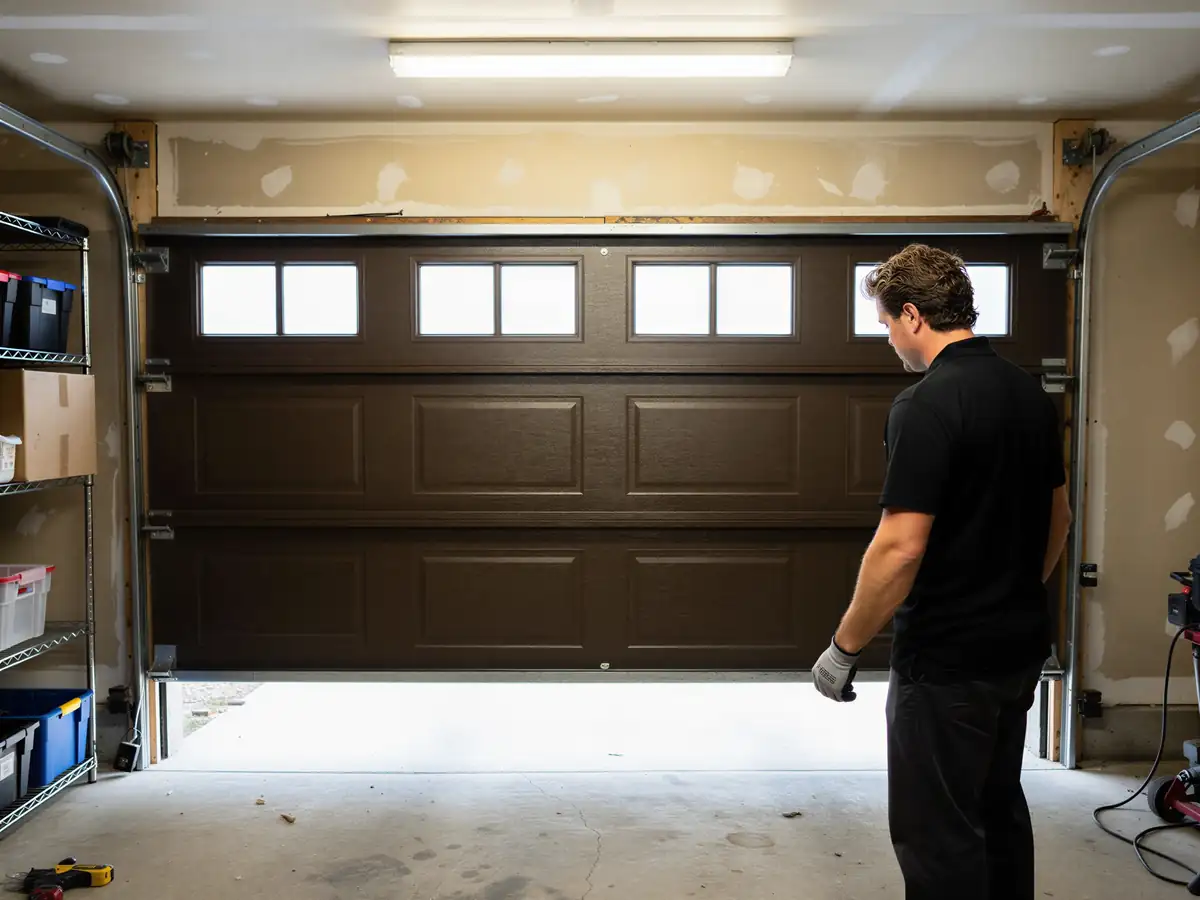
Not every off-track moment is an emergency. If the door still opens and closes all the way and only the top roller on one side looks slightly out of the channel, that can wait for a scheduled visit rather than a same-day call. Forcing a rush job on something cosmetic costs more than it needs to.
A little daylight visible between the track and the frame near the top, with no change in how the door runs, is also something to note and watch rather than panic over - especially on older houses here where some settling is just part of the building's age. Check it again after the next freeze-thaw cycle; if it hasn't moved further, it's stable enough.
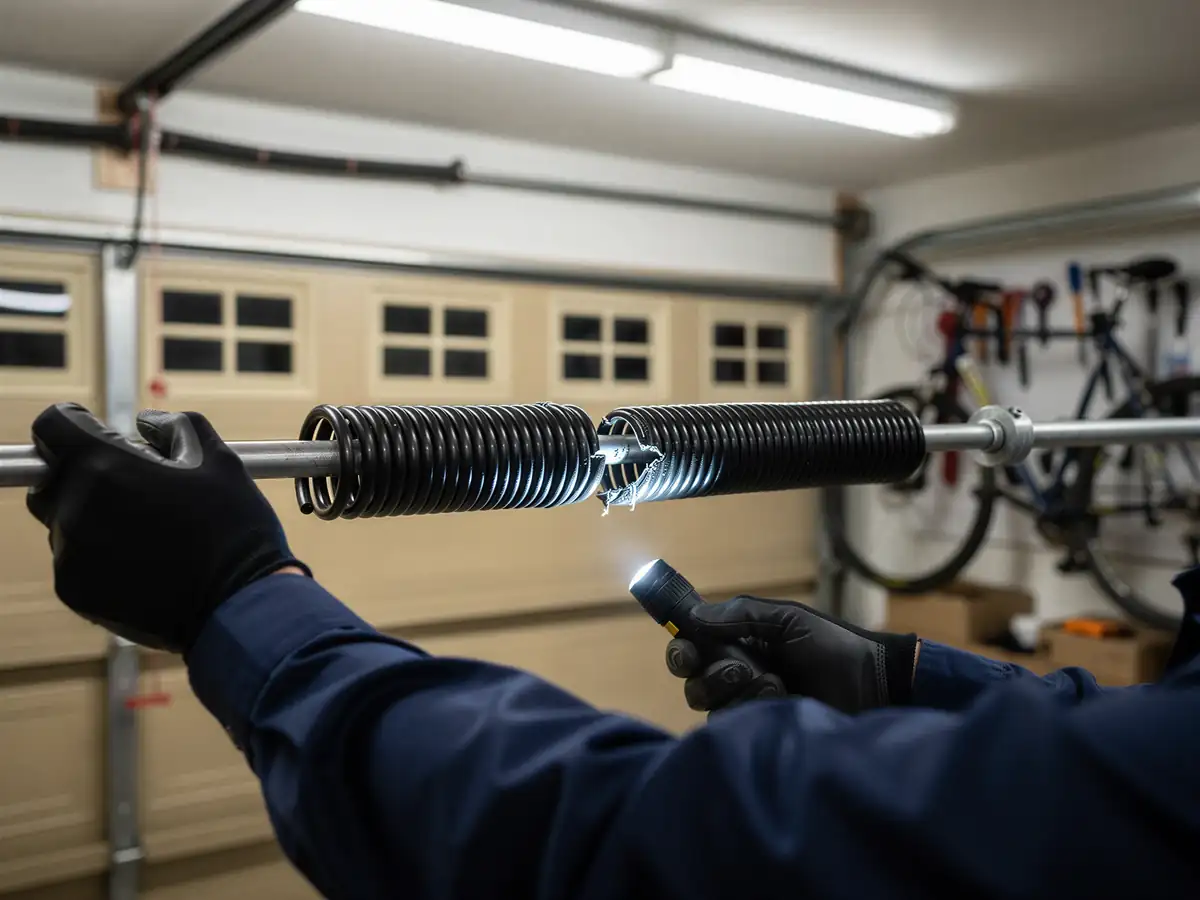
Honest limitation: we don't recommend trying to realign a track yourself if the door is a double, heavier panel, or still under spring tension - the spring is the dangerous part, not the track. But if it's a light single door that's cosmetically off and still functions, there's no harm in living with it until your next scheduled service rather than treating it as urgent.