What the Weather Here Does to It
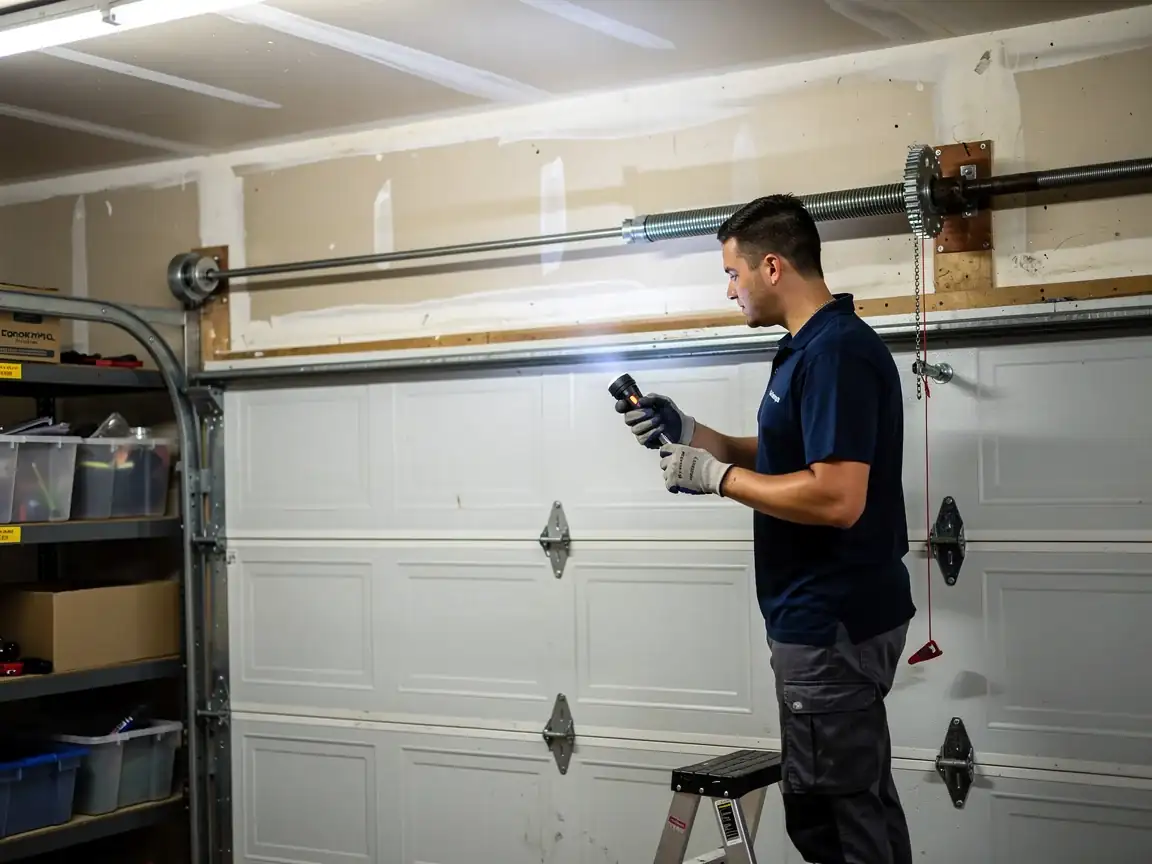
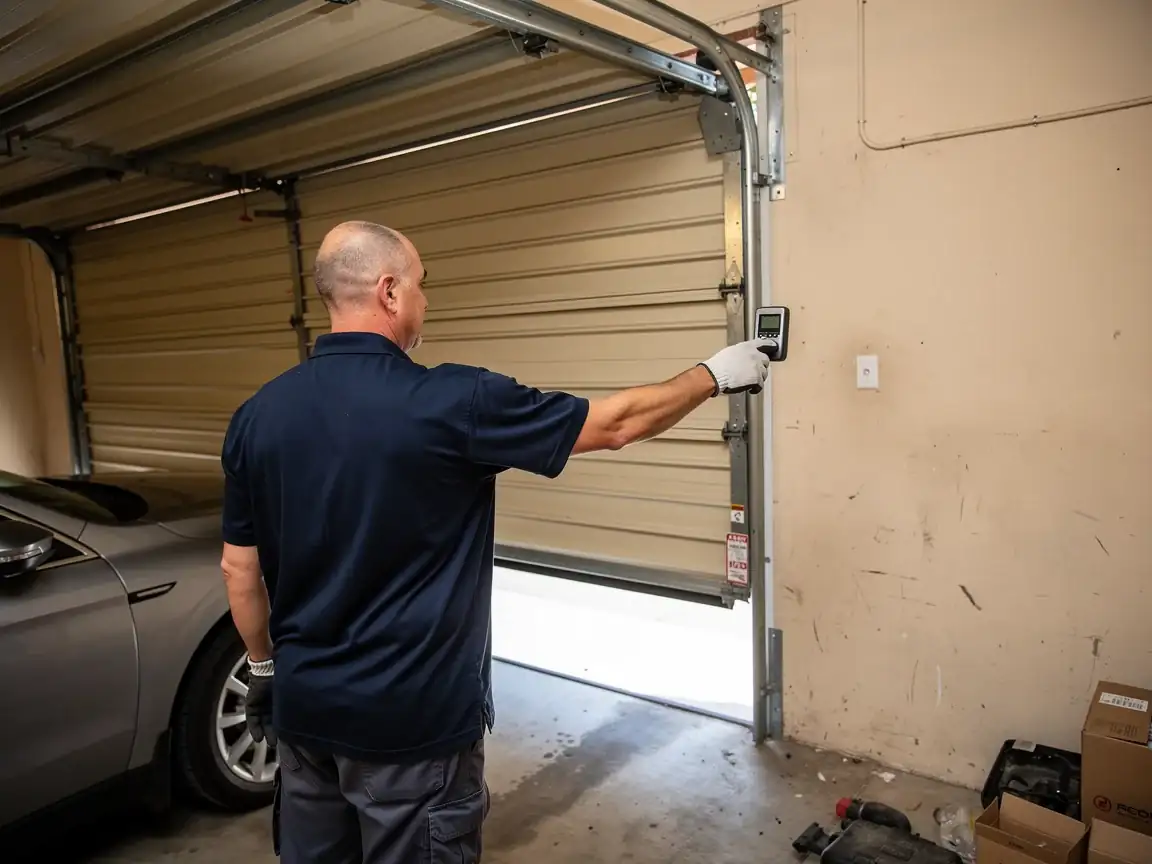
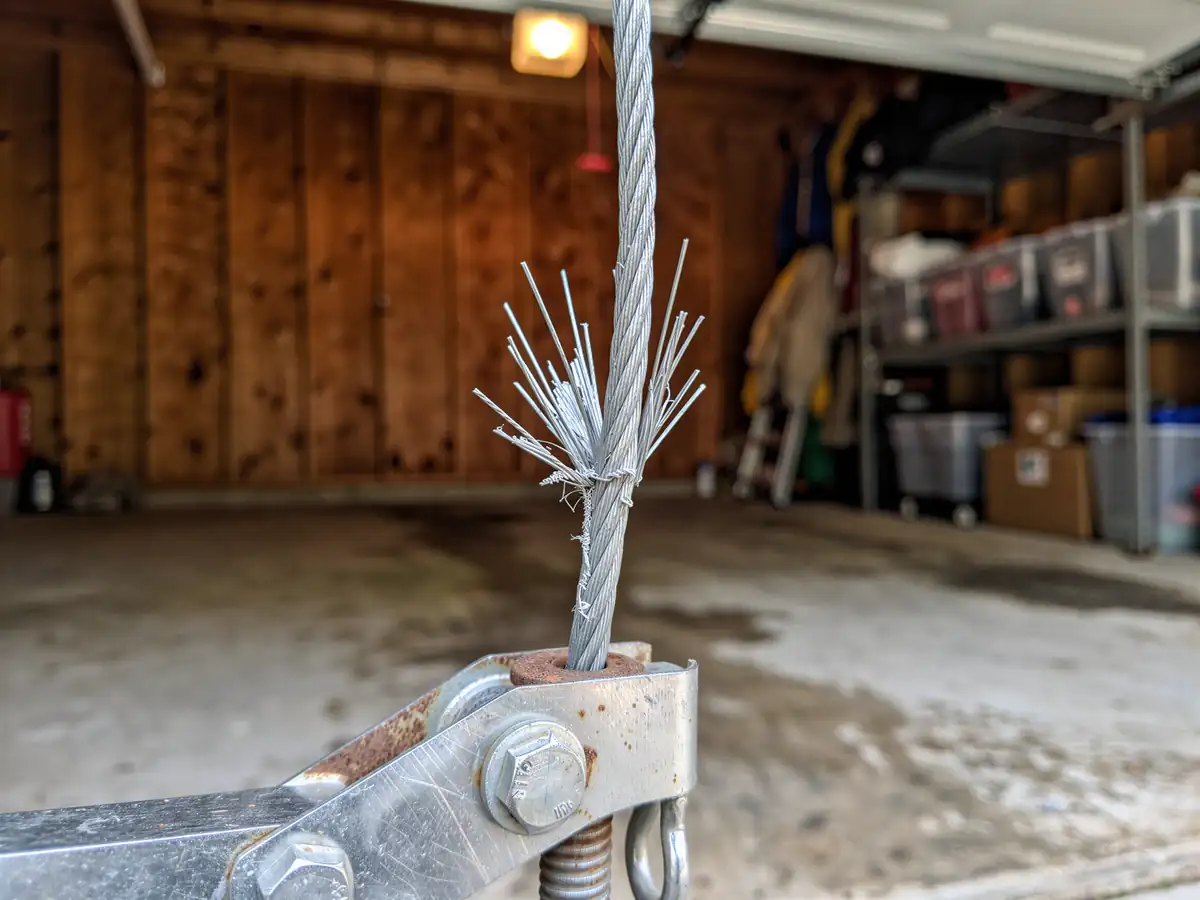
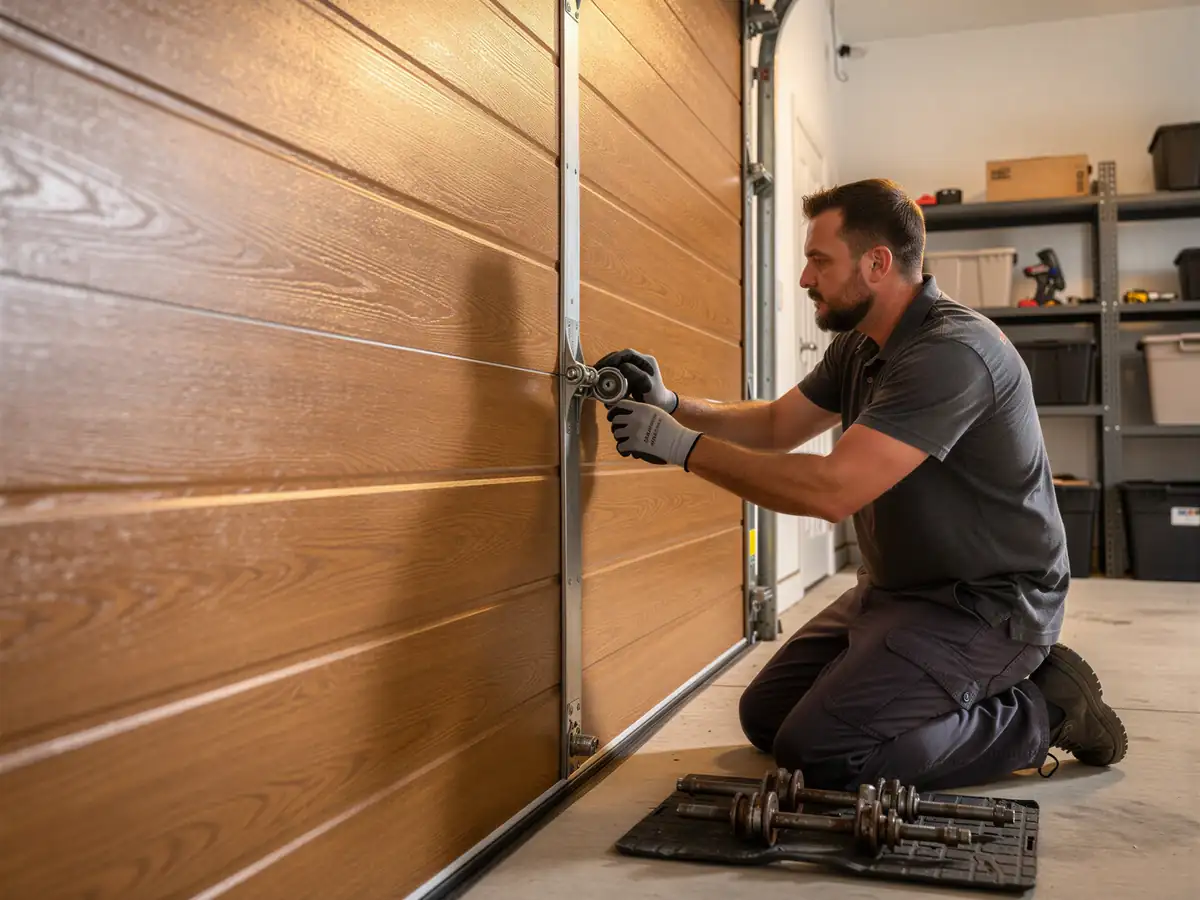
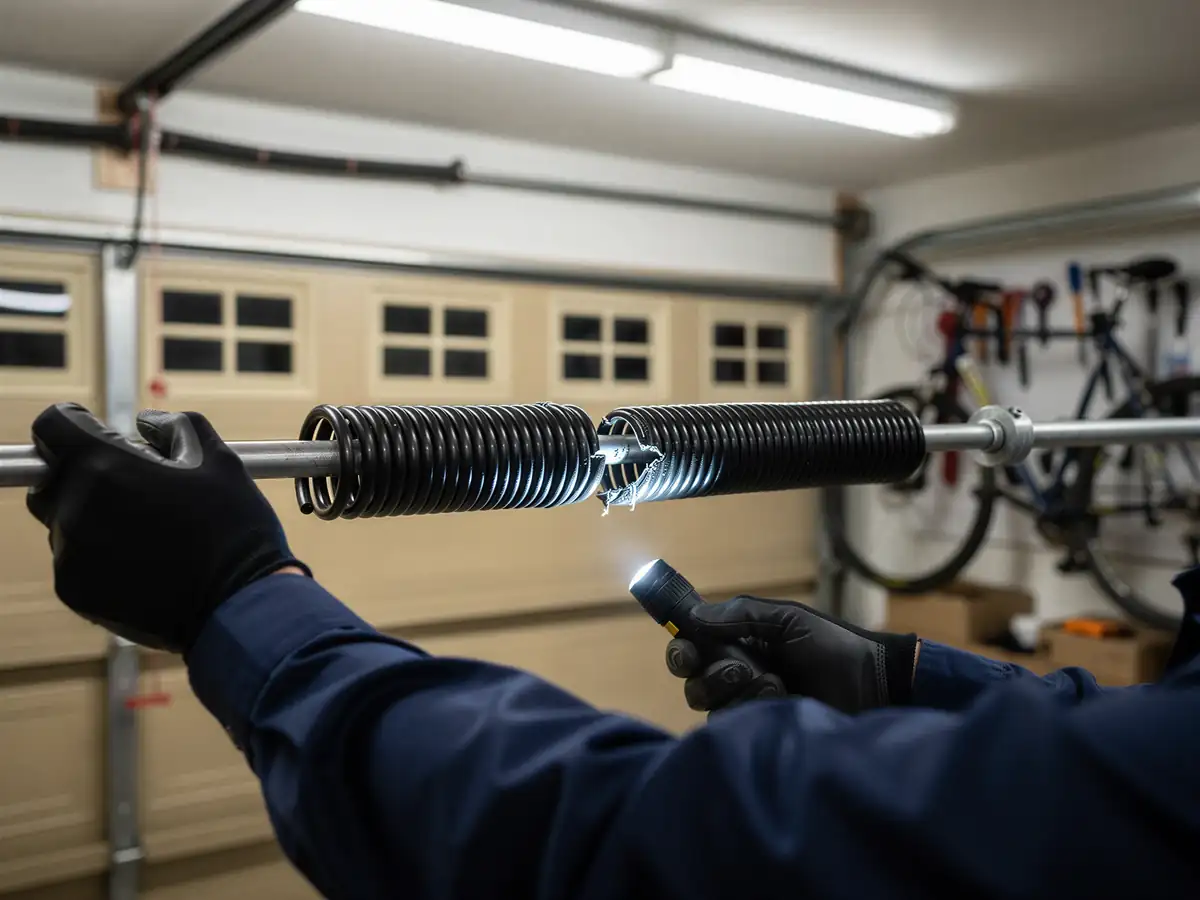
This area sits in a cold-severe climate band, and that matters more than most homeowners expect. Steel contracts in deep cold, which tightens tolerances on tracks and rollers that were never perfectly aligned to begin with. Nylon rollers get brittle. Torsion springs, already carrying years of cycles, lose a bit of tension capacity when the metal is cold, so a spring that was marginal in October can snap in January. Lift cables, which are under constant tension, are more likely to fray or jump the drum when the garage itself swings from near-freezing overnight to warmer midday sun hitting a south-facing door. None of this is dramatic - it's slow wear that a cold winter accelerates. A service call in this climate isn't just lubricating a track. It's checking spring tension against the door's actual weight, inspecting cable fray points at the drum, and looking at weatherstripping that's shrunk and pulled away from the slab, letting cold air and road salt spray into the garage. We won't tell you a door is fine when the hardware shows cold-cycle wear just because it still opens.
The Situation
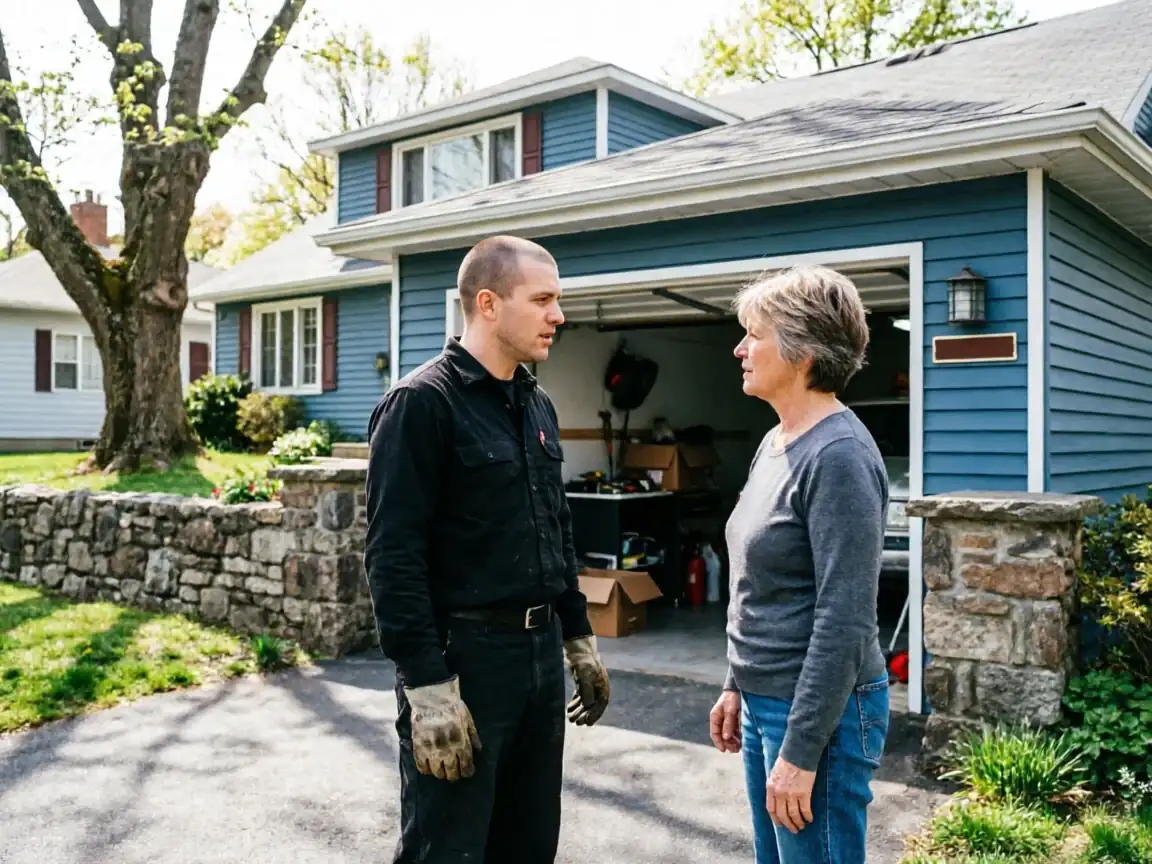
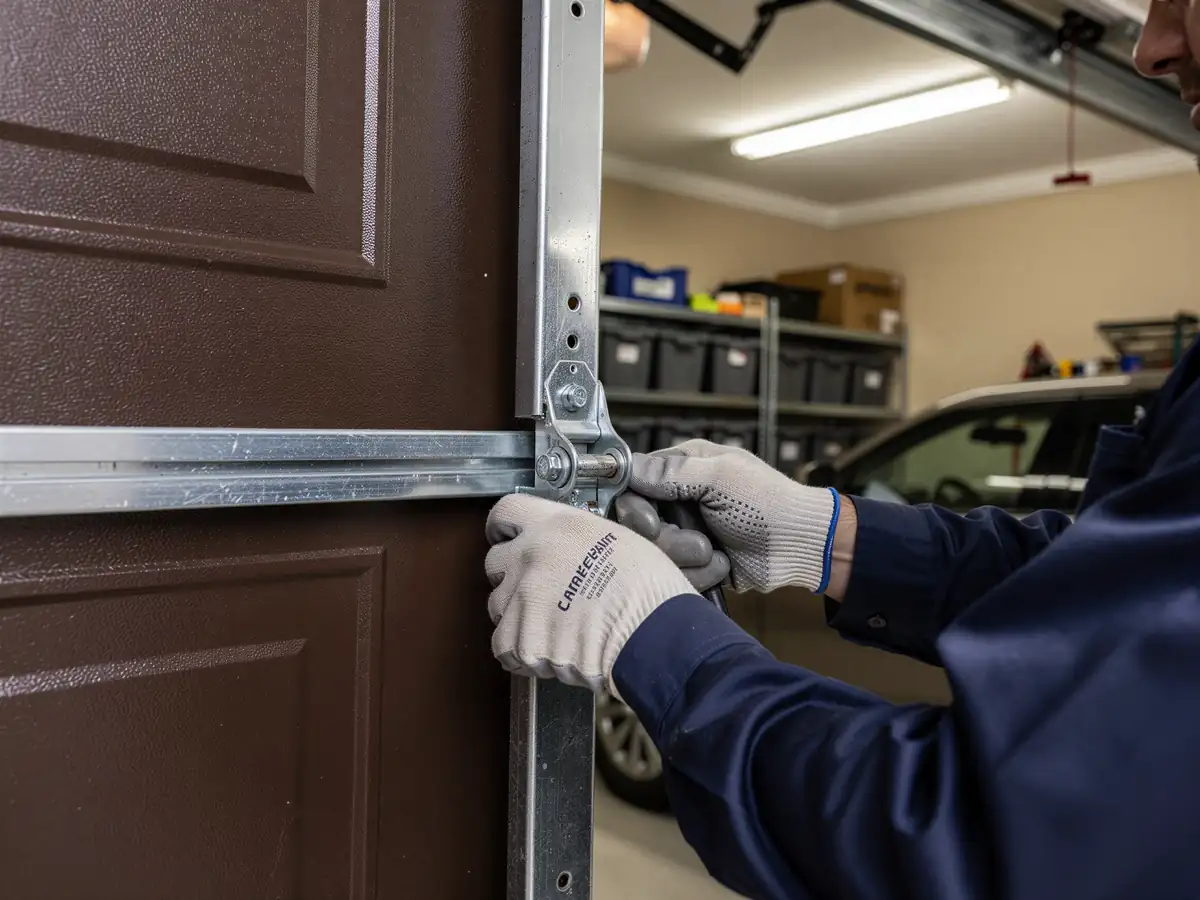
Housing in this part of the state mostly went up between 1938 and 1988, with the median closer to 1965, and the bulk of it following the 1960s-70s building pattern common across the 55 or so named neighborhoods and nearby towns in this service area. That means a lot of original garage openings were built for single-layer steel or wood doors on hardware that's been replaced piecemeal over sixty years - a newer opener bolted to an old track, a spring swapped out without checking drum size, a panel patched after a dent instead of matched. A service call on a house like this often starts with figuring out what's actually original and what's been bodged in over the decades, because the fix depends on what's underneath the paint. Income levels in this area, with a median household income around $152,014, mean a fair number of owners choose full replacement over patching an aging system once repair costs start stacking up, but that's a call we make with you, not for you, after we've actually opened up the hardware and looked.
When Waiting Is Fine
Not everything needs a truck out that day. A little stiffness on the first cold morning that works itself out by afternoon is normal cycling, not failure - check it again after a week before worrying. Cosmetic rust on hinges that doesn't affect movement can wait for a seasonal visit rather than an emergency call. A slightly noisy chain-drive opener on an older door is usually a lubrication issue, not a structural one, and it's reasonable to try a household-grade lube on the chain and rollers before calling anyone. We'll also say plainly: if your opener is original to a 1960s or 70s install and still runs, we're not going to push you to replace it just because newer models exist - we'll tell you when the motor or gears actually show wear, not before. One honest limit: we don't carry every obsolete part for pre-1970s track hardware on the truck, so a repair on a genuinely original setup sometimes means a short wait on parts rather than a same-day fix.